
Here's what nobody tells you about pleasure and partnership timelines
Your body isn't the variable. Your relationship is. And that matters because most advice about using clitoral vibrators treats sensation as static—like it's the same thing whether you've been with someone three weeks or thirty years. It's not. The friction changes. The stakes change. What feels good shifts not because your nerves rewired, but because the emotional context around pleasure shifted.
I've worked with hundreds of couples across thirty years of practice, and I've noticed something consistent: the partners who maintain satisfying physical intimacy aren't the ones with "chemistry" at year five—they're the ones who recognize that each phase of a relationship demands different tools and different approaches. Lemon clitoral vibrators, when used intentionally, become the constant while everything else reorganizes around them.
The early infatuation phase (weeks 1-6 months)
In the beginning, your nervous system is flooded with dopamine and norepinephrine. Arousal happens fast. Your clitoris responds to minimal stimulation. You might not even need a vibrator—your body is doing most of the work.
But here's the twist: if you do bring a lemon clitoral vibrator into early intimacy with a new partner, it often works best as a confidence tool rather than a sensation tool. You're not using it because you need more stimulation. You're using it because the pressure to perform—to come, to look a certain way, to validate your partner's touch—gets quieter when you know you have a reliable source of sensation in your hands. The vibrator becomes permission.
What I see in couples counseling is that partners who use clitoral vibrators early on report better communication later. Why? Because introducing a vibrator early removes the myth that one person is responsible for another's orgasm. You're establishing, from the start, that pleasure is collaborative and technically independent. That foundation matters when the dopamine wears off.
At this stage, lower-intensity patterns work fine. You probably won't need to unlock the full range of what a lemon vibrator offers. The novelty and psychological safety of using it together often matters more than the strength setting.
The comfort phase (6 months to 2 years)
Arousal slows. That's not a problem—it's normal and actually healthy. Your nervous system is shifting from "mate acquisition" mode to "mate maintenance" mode. The norepinephrine drops. The oxytocin rises. Your body needs slightly more direct stimulation to reach the same arousal level you hit easily in month three.
This is where lemon clitoral vibrators become genuinely useful rather than novelty. You're no longer riding the biochemical high of new love. The vibrator isn't a confidence prop anymore. It's a practical tool that compensates for the biological shift and allows you to access the same pleasure you could access intuitively before. Many couples tell me this is the first phase where a vibrator feels essential rather than optional.
I also see partners in this phase start comparing their pleasure to what used to happen. "Sex was easier before," they tell me. That's true, and it's also completely expected. The problem isn't that something broke. The problem is that no one explained this transition. Adding a lemon vibrator here says, "We're adapting. This is still ours. We're just being smarter about it."
The stability and knowing phase (2-5 years)
You know each other's bodies. You've probably been through a conflict or two. You've had boring sex and awkward sex and sometimes mediocre sex. The vulnerability of early partnership has solidified into something more durable but sometimes less exciting.
This is the phase where couples often drift on pleasure because the novelty isn't there to carry the experience anymore. The sex has to be intentional now, not automatic. And intention, paradoxically, is harder than spontaneity.
Here, lemon clitoral vibrators can become the thing that resets attention. Not because you need a "fix," but because introducing a vibrator—or rediscovering one you haven't used in months—creates a container for trying something differently. It's not a performance tool. It's a deliberate choice to say, "I want to prioritize this part of us."
What's interesting is that couples often report their most intense orgasms in this phase precisely because the performance pressure is gone but the vulnerability is still there. You're not trying to impress anymore. You're just showing up. And a lemon vibrator in that context becomes less about needing external help and more about saying, "My pleasure matters enough to be intentional about."
The deeper intimacy phase (5-15 years)
If you've made it here with your partnership intact, you've done something right. The stakes have shifted again. You might have kids. You might be managing aging parents. You might have experienced grief together. The sex isn't about discovery anymore. It's about reunion.
At this stage, lemon clitoral vibrators shift into yet another role. Some couples use them less frequently but more intensely. Others find that regular use becomes the foundation of their physical connection—not because passion faded, but because the body's response time changes, life gets busier, and a vibrator becomes the way you carve out space for sensation amid the noise.
I work with a lot of couples who've been together ten years or more, and honestly? They often have the most satisfying physical intimacy. Not because they're more attracted to each other than new couples. But because they're not waiting for spontaneity. They're scheduling it. They're using tools strategically. And they're not embarrassed about that anymore.
The long-term contentment phase (15+ years)
Your body has changed. Maybe menopause has happened. Maybe hormones have shifted. Maybe you've both gained weight or experienced health changes. The pressure to look or perform a certain way is largely gone—or it should be.
At this point, lemon clitoral vibrators are what they were always meant to be: a straightforward tool for accessing sensation. No psychology around it. No performance. Just, "This is what my body responds to, and I use it because pleasure matters."
Many of my long-term couples report that they use vibrators more regularly in this phase than earlier ones, not because the relationship is in trouble, but because physical intimacy becomes simpler and more direct. You know what you like. You're not negotiating. You're not trying to prove anything. You're just making space for feeling good.
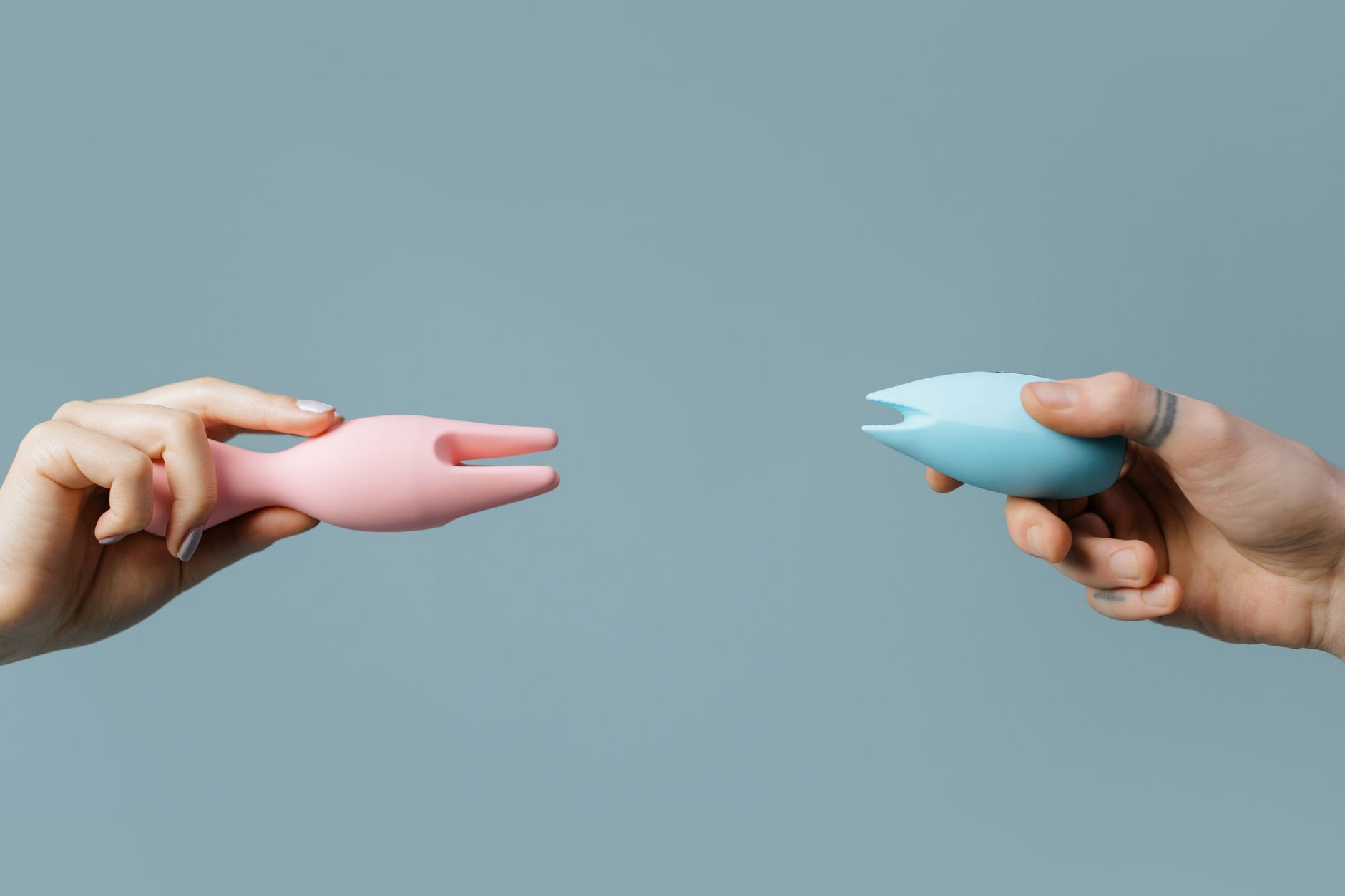
Photo by cottonbro studio on Pexels
What actually changes across these phases
Here's what I want to be clear about: your capacity for pleasure doesn't change. Your clitoris doesn't lose sensitivity because you've been with someone longer. What changes is context, attention, and neurochemistry.
In early partnership, your nervous system is optimized for novelty. Your dopamine system is heightened. Arousal happens faster. In long-term partnership, your nervous system is optimized for safety and predictability. Arousal takes longer to build. But it can actually be deeper because the emotional stakes are different.
A lemon clitoral vibrator works across all of these phases because it doesn't rely on your partner, on the newness of the relationship, or on your neurochemistry of the moment. It provides consistent, reliable stimulation. What varies is why you're reaching for it and what you're using it to communicate—about yourself, your body, and your partnership.
The one thing that actually matters
Across every couple I've worked with, the ones who maintain satisfying sexual connection across years—whether using lemon clitoral vibrators or not—share one thing: they treat pleasure as worthy of the same intention they give to other parts of the relationship.
They schedule it sometimes. They talk about it. They adjust when things stop working. They add tools when they need them. And they don't wait for spontaneity to show up and save them.
If you're in an early phase of partnership and worried you'll lose this, you won't—but only if you start building intentionality now. If you're in a later phase wondering why things feel flat, the issue usually isn't desire or attraction. It's that you've stopped showing up deliberately.
A lemon clitoral vibrator can't fix a relationship. But it can be one tool among many that says: "I'm still choosing this. I'm still showing up. I still think my pleasure—and ours—matters."
FAQ: Your most-asked questions
Should we introduce a lemon vibrator early in a relationship or wait?
There's no "should." Early introduction (with enthusiastic consent from both partners) actually removes a lot of the performance anxiety that can build around sex in new relationships. If you're curious, that's reason enough. If you're not, that's fine too. The couples I see with the strongest sexual connections are the ones who communicate clearly rather than the ones following a specific timeline.
Why does stimulation feel different after a few years together?
It's not you. Neurochemically, your nervous system shifts out of the "mate acquisition" mode (dopamine-heavy) and into "mate maintenance" mode (oxytocin-heavy). Dopamine creates fast arousal. Oxytocin creates deeper intimacy but slower arousal. This is actually an upgrade if you let it be one. You're not broken—you're evolving.
Can using a lemon vibrator together help us reconnect when things feel distant?
It can be a conversation starter, but it won't fix disconnection by itself. The real work is the conversation. "I miss being close to you physically, and I want to try something together. Are you open to that?" That vulnerability is what actually heals. The vibrator is just a container for trying something different together.
Is it normal for my partner to feel threatened by a vibrator?
Very common, especially if they've never had a framework for understanding that you using a vibrator isn't commentary on them. Sometimes it helps to name it directly: "This isn't about you. It's about me knowing my own body and not wanting to rely only on what might work on a given day." Many partners come around once they understand it's not a replacement—it's a collaboration.
Do I need a lemon vibrator at every stage, or are some phases better than others?
You don't "need" one at any stage. But I notice couples use them most intentionally in the comfort phase (6 months-2 years) and the long-term contentment phase (15+ years), because those are the times when pleasure stops being automatic and starts being deliberate. That's not a failure. That's maturity.
How do we talk to each other about pleasure changing over time without it feeling like rejection?
Frame it as discovery, not loss. "I notice I need more direct stimulation now. Let's figure out what that looks like for us." That's not "you're not enough anymore." That's "my body is different, and I want us to adapt together." The couples who handle this well are the ones who treat the body's shifts as collaborative problems to solve, not personal failures.
The truth is, pleasure doesn't end across the lifespan of a relationship. It transforms. And if you're navigating disconnection or conflict, the physical tools matter less than the willingness to keep showing up intentionally. A lemon clitoral vibrator is just one way to do that showing up. But it's a good one.