
Here's what nobody tells you about burnout and sex
When life gets loud, your body goes quiet. Not because desire disappears, but because you stop listening. Burnout creates a kind of numbness where sex becomes another task instead of something you feel. You might go through the motions, or you might avoid it entirely. Both are your nervous system saying: I need to slow down.
The paradox is that using lemon vibrators isn't about speeding things up. It's about creating a permission structure to actually feel something again.
Why your body stopped responding (and how to wake it up)
Burnout rewires your nervous system toward survival mode. Your attention narrows. Your body becomes a vehicle for productivity rather than a source of sensation. When you finally have time for intimacy, your nervous system is still in fight-or-flight. Arousal requires the opposite state: rest and safety.
Clitoral vibrators like the Lemon can act as a reset button, but only if you approach them differently than you might when things feel normal. Instead of chasing orgasm, you're rebuilding the capacity to notice what feels good. That distinction changes everything.
Most of my clients report that their first reconnection with pleasure after burnout happens slowly, over several weeks of consistent, no-pressure exploration. The vibration itself becomes a physical anchor that says: right now, for the next 15 minutes, your only job is to notice sensation.
The three-stage approach to rebuilding body awareness
Stage one: Solo exploration without performance pressure
Start alone. This matters because your nervous system will still be scanning for someone else's needs, even if they're not in the room. Give yourself 15 to 20 minutes when you know you won't be interrupted.
Don't aim for an orgasm. Seriously. Set the intention differently: "I'm going to spend 20 minutes noticing what this feels like." This sounds small, but it reframes the whole experience from outcome-focused to sensation-focused.
Start with the Lemon vibrator on the lowest setting. Keep it on your clitoris for 30 seconds, then pull away. Wait a minute. Notice what you feel. Do it again. This isn't edging in the traditional sense. It's more like a sensory conversation with your own body.
Many people find that their first few sessions generate barely any arousal. That's normal and not a failure. Your nervous system is just learning it's safe to feel again. The fact that you're paying attention is the win.
Stage two: Building a sustained connection
After a week or two of stage one, you can extend your sessions to 30 minutes and use the vibrator more continuously. Notice where you want more stimulation and where you want less. Does pressure on the side of your clitoris feel different than direct contact? Does it help to shift the angle?
These questions are critical because they rebuild your sexual literacy. Burnout erases this knowledge. You're not broken. You're just remembering how to speak your body's language.
Some people benefit from combining vibration with sensation work elsewhere: touching your own neck, breasts, or inner thighs while using a lemon clitoral vibrator. This integrates pleasure across your whole nervous system instead of isolating it to one zone.
If your mind wanders (which it will), gently bring your attention back to the physical sensation. This is mindfulness, but make it sexy.
Stage three: Reintroducing a partner (if that's your dynamic)
Once you've rebuilt your own pleasure map, involving a partner becomes less about performing for them and more about sharing something you've already reconnected with. This reverses the pressure.
Start by letting them watch while you use the lemon vibrator solo. This builds intimacy without requiring you to be aroused on command. You can walk them through what feels good. They can learn your body's actual language instead of guessing.
When you do involve them directly, keep the vibrator as the star. They might hold it for you, or you might hold it while they touch you elsewhere. The device creates a clear container: this is what attention feels like. This is pleasure that's just for you.
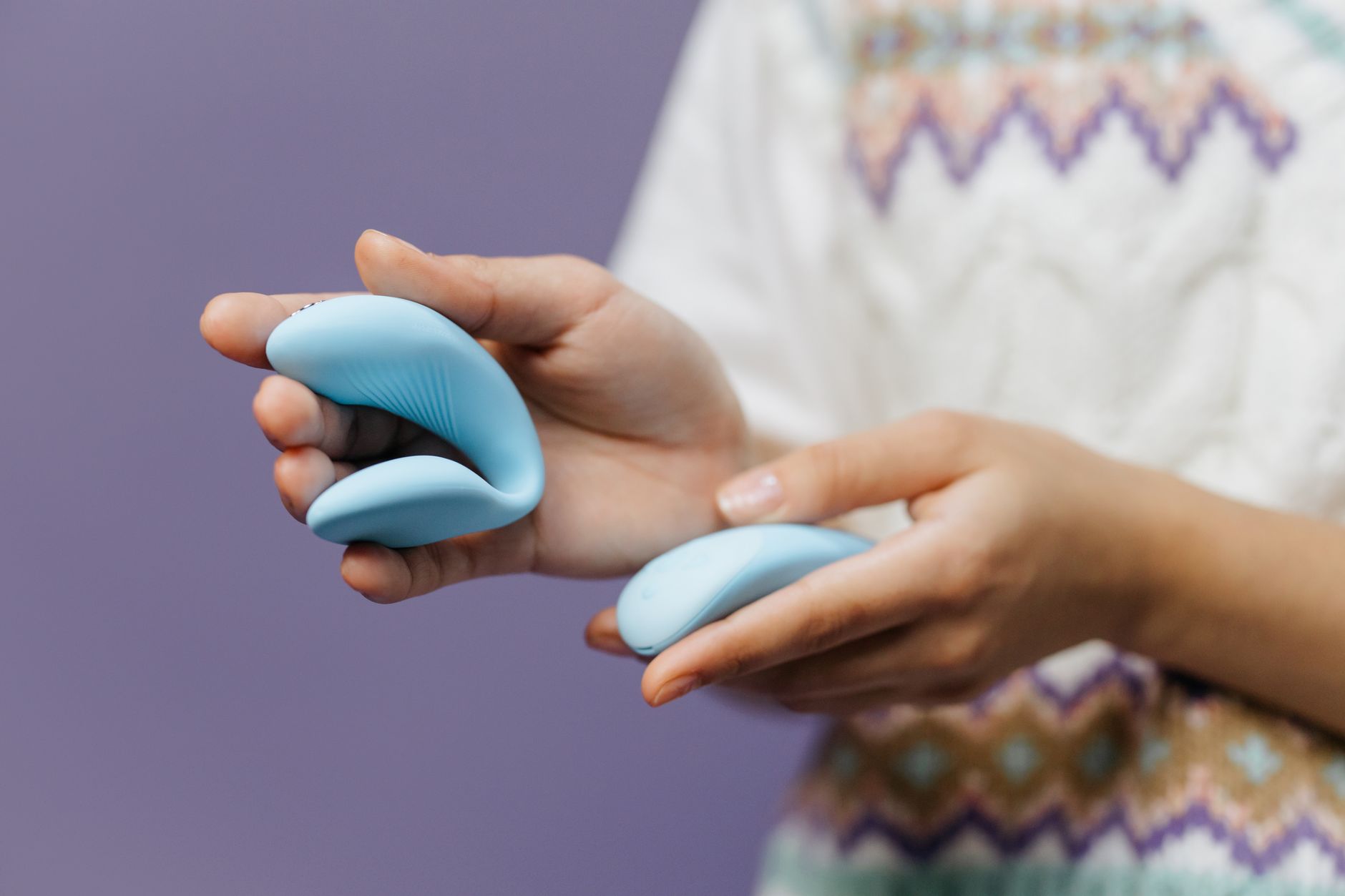
Photo by cottonbro studio on Pexels
Why lemon vibrators work specifically for reconnection
Clitoral suction vibrators work differently than traditional vibrators. They use gentle air-pulse stimulation instead of direct vibration. For someone rebuilding body awareness after burnout, this matters because suction feels like a sustained sensation rather than a rapid buzz. Your nervous system can actually track it. It's easier to be present with.
The Lemon's range of intensity (from barely-there to intense) also means you don't have to choose between "nothing" and "too much." You can find the exact threshold where sensation is interesting but not overwhelming. Burnout makes people sensitive to overstimulation, so this graduated approach helps.
Many of my clients also report that the ritual of unwrapping the device, charging it, setting aside time, and using it creates a psychological permission slip. It's not a quickie. It's a practice. That distinction helps your nervous system understand that intimacy with yourself matters enough to schedule.
The emotional terrain to expect
Don't be surprised if reconnecting with pleasure brings up grief or sadness. Burnout often masks these emotions. When your nervous system finally feels safe enough to feel, everything comes up. That's not a sign you're doing it wrong. That's healing.
If sadness shows up mid-session, you can keep going or stop. Both are fine. Some people find that pleasure and sadness can coexist, and that's actually where real integration happens.
Also expect to feel self-conscious at first, even when you're alone. Our culture trains us away from our own pleasure. Spending 20 minutes with your clitoris and nothing else can feel weirdly taboo. That's cultural conditioning, not truth. Your pleasure is as legitimate as your productivity.
Practical timing and frequency
Aim for 3 to 4 sessions per week, ideally at a time when you're already relaxed. Morning sessions (after coffee but before work anxiety builds) work for some people. Evening sessions after a bath work for others. Avoid using the lemon vibrator when you're already depleted. Reconnection requires some baseline energy.
Sessions don't need to result in orgasm. In fact, for the first 4 to 6 weeks, many people don't orgasm at all. Orgasm shows up again when your body has rebuilt its sense of safety. Trying to force it defeats the purpose.
Once you're further in, 2 to 3 sessions per week maintains what you've rebuilt. This is maintenance, not crisis intervention.
When to bring a partner into the conversation
If you're in a partnership, let them know what you're doing before you start. "I'm going to spend some time reconnecting with my own pleasure. It's not about you or us. I just need to rebuild something for myself." Most partners appreciate the honesty and the clarity.
If your partner pushes back or interprets this as rejection, that's a separate conversation worth having. You're not rejecting them. You're attending to yourself. That's the opposite of rejection.
If your partner wants to participate immediately, you can invite them into stage two or three, but stage one is yours alone. Protect that container.
What changes when you reconnect
After 6 to 8 weeks of consistent practice, most people report: clearer arousal signals, easier access to orgasm, greater interest in sex overall, and a sense of actual feeling in their body during intimacy instead of going through the motions. The lemon vibrator remains useful after this point, but you'll use it differently. It becomes a tool you choose because it feels good, not because you're trying to rebuild something.
Relationships also improve. When you're no longer frantically chasing orgasm or performing desire you don't feel, actual intimacy becomes possible. Your partner gets the real you, not the burnout version. That's worth the 8 weeks of slow work.
FAQs
How long does it actually take to feel pleasure again after burnout?
Everyone's timeline is different, but most of my clients report noticeable shifts within 3 to 4 weeks of consistent practice. Full reconnection typically takes 8 to 12 weeks. Be patient with yourself. Your nervous system learned to go numb for a reason. It takes time to learn safety again.
Can I use lemon vibrators if I still feel completely numb down there?
Yes. Actually, numbness is often where reconnection starts. The vibration can help wake up nerve endings that have been dormant. Keep your expectations realistic (small shifts, not instant fireworks), and give it time to work.
What if I orgasm right away on the first try?
That's also fine. There's no wrong way to reconnect. Some bodies respond immediately once they get permission to feel. If that's you, great. Just keep practicing so you can rebuild consistency, not just the ability to orgasm once.
Is it normal to feel emotional or even cry while using a vibrator?
Completely normal. Pleasure and grief often live close together, especially if you've been numb for a while. Let the emotions move through. You're not broken. You're healing.
Should I tell my partner I'm using a vibrator if we're reconnecting as a couple?
Yes, ideally before you start. Not because you need permission, but because honesty creates safety. If you want to keep early sessions private, that's fine too. Just be clear about your boundaries upfront.
How do I know when I'm ready to involve my partner again?
When you feel actual pleasure and not just obligation. When you can describe what feels good without second-guessing yourself. When the thought of intimacy with them feels interesting instead of like a task. That's usually week 5 or 6 if you've been consistent.
The bigger picture
Burnout doesn't just affect your sex drive. It affects your ability to feel anything. Reconnecting with pleasure through mindful use of a lemon clitoral vibrator is about more than sex. It's about reclaiming your right to feel good. Your body deserves attention. Your pleasure matters. And sometimes you need permission and a tool to remember that.
Start small. Be consistent. Notice what you notice. That's all you need to do. The rest will follow.