
Let's name the real problem first
Your partner doesn't want you using a vibrator. Maybe they said it directly. Maybe they made a joke that landed sideways. Maybe they just went quiet when you brought it up, and that silence felt worse than an argument.
Here's what I hear from couples in this exact spot: "He thinks I'm replacing him" or "She feels like I'm saying she's not enough" or "They're worried it means I don't want them anymore."
Those fears are real. And they're usually wrong.
Why partners resist vibrators (the actual reasons)
Resistance rarely has anything to do with the vibrator itself. It's almost always about what your partner thinks the vibrator means about them, about you, or about your relationship.
Three big ones I see clinically:
1. Inadequacy. Your partner may believe a lemon vibrator getting you off proves they can't. This is understandable and wildly inaccurate, but it lives in their nervous system as truth. A clitoral vibrator works differently than your partner's touch. It's not better. It's differently targeted.
2. Invisibility. If you introduce the vibrator as a solo tool, your partner feels excluded from pleasure instead of part of it. They weren't consulted. They weren't invited. It feels like a rejection packaged as a sex toy.
3. Shame by proxy. Some partners worry that wanting a vibrator means you have desires they can't meet, which triggers their own shame about sexual adequacy. Their resistance is actually protective. They're trying to keep themselves safe from feeling broken.
Once you understand what your partner actually fears, the conversation changes entirely.
Starting the conversation (not during sex)
Do not introduce a vibrator mid-intimacy. Do not leave it on the nightstand as a hint. Do not order it, let it arrive, and then explain it.
Instead, pick a moment when you're both calm, clothed, and not about to have sex. A Sunday morning. A walk. Somewhere that feels safe and separate from the bedroom.
Open with something like this:
"I've been thinking about our sex life, and I want to try something new. I'm not bringing this up because I'm unhappy with you. I'm bringing it up because I want more pleasure between us, and I want your input."
Notice what's in there: you're framing the vibrator as something that enhances the two of you, not something that replaces them. You're explicitly saying you're not unhappy. You're asking for their collaboration.
Then pause. Let them respond. Their first response will usually be defensive, so don't match that energy. Stay warm.
Reframing what a vibrator actually does
Your partner probably thinks a lemon vibrator is a competitor. Your job is to explain that it's a tool for pleasure, not a replacement for partnership.
Here's what works:
"A vibrator doesn't do what you do. Your hands feel different. Your body, your presence, your connection. those things matter. What a vibrator does is stimulate my clitoris in a specific way that helps me relax into pleasure faster. It's like the difference between a hand massage and a professional massage. Both feel good. They feel different. I want both."
That last line is key. "I want both." Not "I want the vibrator instead" or "You're not enough." Both.
If your partner is still skeptical, try this angle: "Using a vibrator with you there means I'll orgasm more reliably. That means more pleasure. More pleasure means I'm more present with you, not less."
That's not flattery. It's neuroscience. When people aren't anxious about whether orgasm will happen, they're less in their head and more in their body. That's better for everyone.
Bringing them into the experience
This is the move that transforms resistance into curiosity.
Instead of positioning the vibrator as something you use alone, invite your partner to be part of it. "I want to use this with you. Not instead of you. With you."
That could mean:
Your partner holds the vibrator against your body while you kiss. You're not isolated with the toy. You're connected to them while experiencing the stimulation.
Your partner uses the vibrator on you while you touch them. Role reversal. They're giving you pleasure with a tool, which is often less threatening than it feels.
You use the vibrator on yourself while they're inside you or touching you elsewhere. You're collaborating toward a shared goal: your pleasure, together.
All of these keep the vibrator from feeling like a solo project. It becomes something you're doing as a couple.
Most partners who felt resistant become curious once they're invited in. Curiosity is the door. Sometimes curiosity becomes enthusiasm.
Addressing the specific fears (without flinching)
If your partner says something like "Does this mean you don't need me anymore," that's the moment to be direct.
"No. But I do need different things at different times. I need your hands, your body, your presence. I also need direct clitoral stimulation sometimes to get there. Those are separate needs. You're not failing me by not being a vibrator. A vibrator is failing me if it makes you feel bad."
That's honest. That's collaborative. That puts the real issue on the table: they're feeling inadequate, and you're saying that inadequacy isn't real.
If they say "This feels like cheating" or "I feel like you're replacing me," stay calm and stay truthful.
"I understand why it feels that way. It's not. I'm not hiding this. I'm inviting you to be part of it. That's the opposite of betrayal. If I wanted to shut you out, I would. Instead, I'm saying, 'Let's do this together.'"
The key to each of these conversations is this: you're not convincing them the vibrator is good. You're showing them that your desire for pleasure doesn't diminish your desire for them.
What to do if resistance hardens into refusal
Sometimes you have a conversation, you do everything right, and your partner still says no.
That's information. And it's worth exploring.
If the resistance stays solid after good faith conversation, the vibrator isn't the real issue anymore. The issue is that your partner either doesn't trust you, feels unsafe in the relationship, or isn't willing to prioritize your pleasure. Any of those is worth addressing in a different way. Sometimes that means a couples therapist. Sometimes that means a bigger conversation about what you both need from this relationship.
I won't sugarcoat it: a partner who refuses your pleasure as a boundary is setting a concerning boundary. Not about vibrators. About you.
But most of the time, resistance softens once your partner feels genuinely included and understood. Once they see that the vibrator isn't a threat to them. Once they realize it might actually enhance things for both of you.
Making the first experience count
After you've talked it through and your partner has agreed to try, the first time matters. Don't pick a night when you're both tired. Pick a night when there's space, time, and low pressure.
Start with the vibrator at a low setting. Let your partner hold it if they want to. Keep talking. Keep connecting. This isn't about the fastest route to orgasm. It's about your partner seeing that you're still you, still with them, just experiencing pleasure in a new way.
If you own a Lem vibrator or another clitoral vibrator from Lemon Toy Shop, show them how it works before you use it. Let them hold it. Let it be demystified. A lot of fear evaporates when something stops being an abstract threat and becomes a concrete object in their hands.
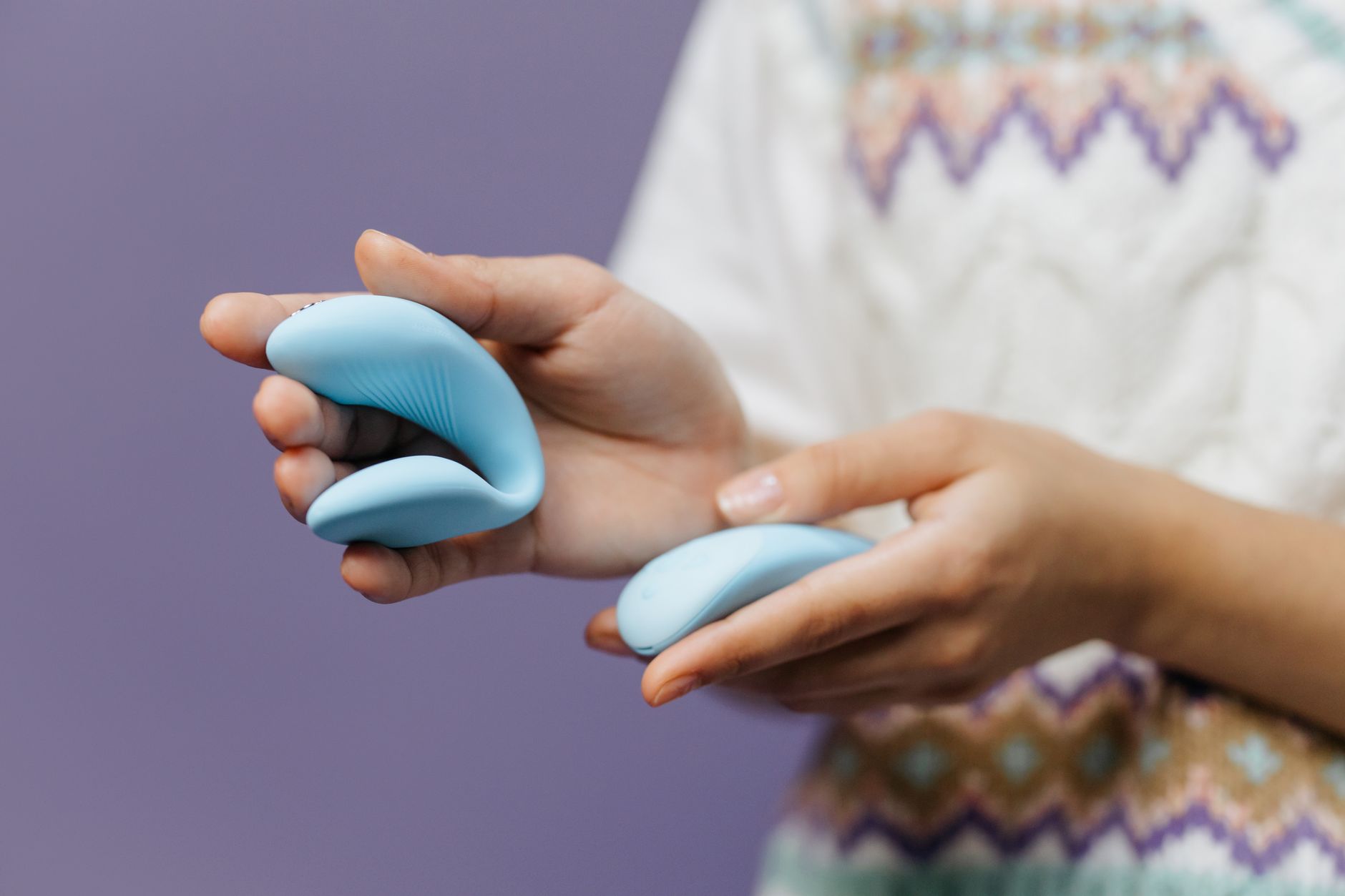
Photo by cottonbro studio on Pexels
After that first time, check in. Not in a performance review way. Just: "That was nice. How did you feel about it?"
Their answer tells you everything. Sometimes they'll say, "I liked watching you respond." Sometimes they'll say, "I'm still getting used to it." Both are fine. This is a process, not a switch you flip.
The longer view
Resistance to vibrators is often resistance to the broader conversation: "Does your pleasure matter as much as mine? Will you prioritize your own satisfaction? Do you trust me to want what's good for me?"
Those are relationship questions masquerading as sex toy questions.
When you bring a vibrator into your partnership intentionally, you're not just adding a tool. You're saying: my pleasure matters. Your pleasure matters. Our pleasure together matters. And we're going to figure this out as a team.
Most partners who start from resistance end up curious. Some end up enthusiastic. All of them move into a place where the vibrator is no longer a threat. It's just part of how you two connect.
That shift usually takes 3 to 5 conversations and a few positive experiences. Be patient with the process. Your partner isn't being difficult. They're being human. And humans need time to trust new things.
People also ask
What if my partner wants to control the vibrator?
That's actually a good sign. It means they're engaged. Let them. Offer it to them. Many partners who felt threatened by the vibrator relax once they're holding it. It becomes a tool they're using to pleasure you, which feels collaborative instead of competitive. The goal isn't who controls it. The goal is pleasure you both feel good about.
Can I use a Lemon clitoral vibrator during penetration?
Yes. Many couples find that using a vibrator against the clitoris during penetration deepens sensation and makes orgasm more accessible. Your partner is inside you. You're using the vibrator on yourself or your partner is. You're connected. This often feels less threatening than solo vibrator use because the intimacy is visible and present.
What if my partner thinks vibrators are for people whose partners can't satisfy them?
That's a belief worth gently challenging. Vibrators aren't for unsatisfied people. They're for people who want to explore sensation differently. Elite athletes use heart rate monitors. That doesn't mean their cardiovascular system was failing. It means they want to understand their body better. Same logic. Reframe it from "I need this because you're not enough" to "I want this because I'm curious."
How do I know if my partner's resistance is normal hesitation or a real incompatibility?
Normal hesitation sounds like: "I'm nervous about this" or "Give me time to get used to it." Real incompatibility sounds like: "You can't do that in this relationship" or "If you use that, we're done." The first is something you can work through together. The second is a dealbreaker worth taking seriously. Don't ignore it.
Should I hide the vibrator if my partner doesn't like seeing it?
No. Hiding it signals shame. You shouldn't feel shame about your pleasure. That said, if seeing the vibrator on the nightstand stresses your partner out, store it in a drawer. But frame it as practicality, not concealment. "I'll keep it in here so we have less clutter." Not: "I'll hide it because you're uncomfortable." That reinforces the idea that your pleasure is something to apologize for.
Is there a chance my partner will come around if I just wait?
Not reliably. Waiting usually means the resentment grows silently on both sides. You're frustrated that your partner won't let you explore your pleasure. Your partner is anxious about where this is heading. Neither of you is moving forward. Have the conversation. Give it time after the conversation. But don't wait in silence.
Moving forward together
Your partner's resistance is real, but it's not final. Most couples move past it once the vibrator stops being an abstract threat and becomes part of their intimate life together.
The tools matter less than the conversation. When you talk openly about pleasure, about fears, about what you both need, you're building something bigger than sex. You're building trust.
If you'd like to talk through this with someone trained in couples dynamics, reach out. We're here to help.
Contact us if you want to explore this further with professional guidance.