
When Your Body Turns Up the Volume
Let's be real. Hormonal shifts don't always dim your pleasure. Sometimes they turn it way up. Birth control changes, cycle timing, or the shift into perimenopause can make your clitoris feel almost oversensitive. What felt perfect three months ago now feels like too much. This is completely normal. And it's also completely fixable.
Here's what happens: hormonal fluctuations change blood flow to the vulva and increase nerve sensitivity in the clitoral area. It's the same biological mechanism that can make your breasts tender, except in this case, you're dealing with heightened erotic sensation. That's actually a gift. You just need to recalibrate how you're using your lemon vibrators to work with your body instead of against it.
Why Sensitivity Spikes Happen
Three major hormonal scenarios trigger increased clitoral sensitivity.
Hormonal birth control changes. If you switched pills, started or stopped hormonal contraception, or changed the dosage, your estrogen and progesterone levels shift. This affects blood vessel reactivity. Higher estrogen, in particular, can increase vulvovaginal blood flow and make nerve endings more responsive. You might notice this happening in the week before your period naturally, too. Same mechanism.
Cycle timing sensitivity. People who menstruate often experience peak clitoral sensitivity in the days leading up to ovulation, when estrogen surges. If you typically use lemon vibrators during this window and haven't adjusted for the amplified sensation, you're essentially using the wrong intensity for that part of your cycle.
Perimenopause and early menopause tissue changes. Yes, we talk a lot about decreasing sensation with age. That's real. But some people experience a temporary increase in clitoral sensitivity during the hormonal transition itself, before sensation eventually plateaus or shifts. Your nerves are reacting to the changing hormonal environment.
Regardless of which scenario applies to you, the fix is the same. You need to revisit how you're stimulating yourself.
The Technique Shift: Less Isn't Always Less
When you're experiencing heightened sensitivity, your instinct might be to avoid your favorite lemon vibrators altogether. Don't. Instead, change how you're using them.
Distance matters. This is the easiest adjustment. Instead of holding a clitoral vibrator directly against your clitoris, try placing it against the outer labia, slightly to the side, or over your underwear. You get all the stimulus without the direct intensity. The vibration still reaches the nerve endings. You're just dampening the immediate pressure. With air-suction vibrators like Lemon Toy Shop's clitoral vibrators, you can reduce suction strength by releasing the seal slightly, letting air flow in and out more freely. This lowers the intensity without turning the device off.
Pattern switching is your friend. Most quality lemon vibrators have multiple patterns and intensity levels. If your device normally lives on setting 5 or 6, try running it on 1 through 3 for the next week or two. You'll be shocked how satisfying a lower speed is when your body's already primed. As your hormones stabilize, you can gradually climb back up the intensity scale.
Angle adjustments. Your clitoris isn't flat. It has different zones of sensitivity. When you're experiencing heightened sensation, experiment with angles. Tilt your lemon vibrator slightly so it's making contact with the shaft or hood of your clitoris rather than the glans (the most nerve-dense tip). This distributes intensity across a larger area and feels less sharp.
Timing and Warm-Up Strategy
Heightened sensitivity often means you reach arousal much faster. Use this to your advantage.
Reduce your warm-up time to match your body's current state. If you used to spend 15 minutes with manual stimulation before introducing a vibrator, try 5 to 7 minutes now. Your body's already there. Pushing past peak arousal and using intense vibration when you're already at the edge often feels overwhelming rather than pleasurable.
Also pay attention to where you are in your cycle or hormonal pattern. If your sensitivity spikes on days 10 through 14 of your cycle, schedule self-pleasure time on those days deliberately. Your lemon clitoral vibrator will feel incredible instead of like too much. On the days when sensitivity is lower, you can push intensity higher if you want to.
The Lube Factor You Might Have Overlooked
When sensitivity increases, what you use for lubrication becomes more important, not less.
Water-based lubricant creates a gentle buffer. It doesn't numb sensation the way some numbing lubes do. Instead, it distributes vibration more evenly across the tissue. If you usually use lube, try switching to a thicker, slower-glide formula. Premium water-based lubes stay slicker longer and allow the vibration to travel more smoothly.
If you don't usually use lube, try introducing a small amount during this sensitive phase. It won't reduce pleasure. It'll actually make the sensation more nuanced by preventing any friction that feels sharp or too pointed.
Communication and Solo Exploration
If you're using lemon vibrators with a partner, heightened sensitivity is worth discussing directly. "My body's feeling more sensitive right now" is all the context they need. It doesn't mean anything is wrong. It means you need a small technique shift.
When you're exploring alone, give yourself permission to sit with the sensitivity instead of fighting it. Use your vibrator on the gentlest setting. Notice what feels good. Does lower intensity actually feel better, or were you just panicking because the sensation was different? Often you'll find that once you acclimate to the amplified sensation, you enjoy it.
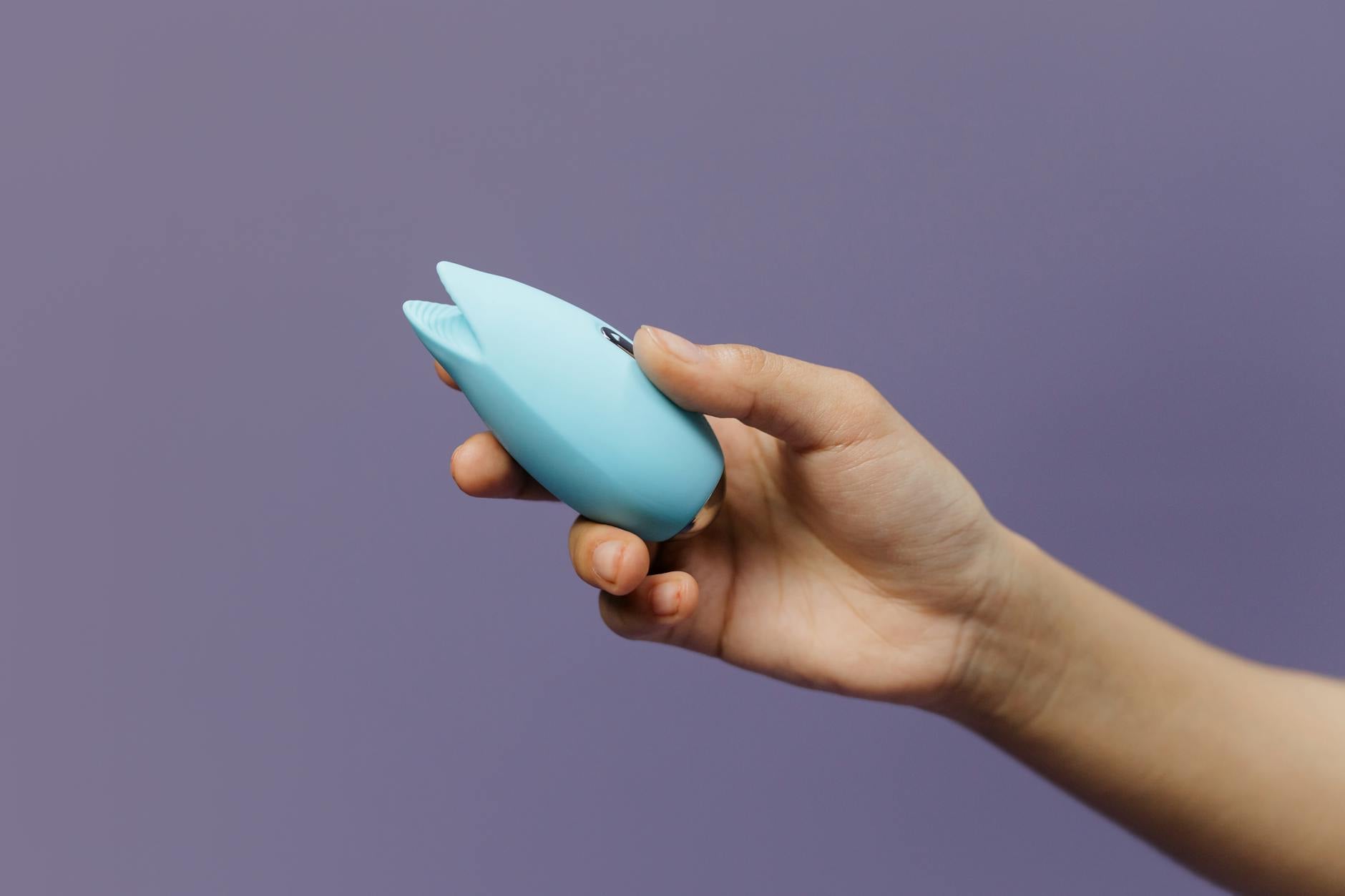
Photo by cottonbro studio on Pexels
When to Know Something Else Is Going On
Heightened sensitivity is normal and usually temporary. But sharp pain, burning sensation, or a feeling that even the gentlest pressure is unbearable might signal something else. Hormonal sensitivity feels like "wow, that's more intense" not "that hurts."
If pain accompanies your sensitivity spike, check in with your doctor or gynecologist. You might be dealing with contact dermatitis from lube or toy material, a yeast infection, or another condition that needs attention. These are all treatable. Don't just power through.
Also, if your sensitivity increase came alongside major life stress, consider whether anxiety or tension in your pelvic floor is part of the picture. Sometimes what feels like heightened sensation is actually a tightened pelvic floor making normal stimulation feel intense. Breathing work and intentional relaxation can help more than technique changes in those cases.
Rebuilding Your Relationship With Your Tools
Remember that lemon vibrators are adjustable. They're not one-size-fits-all devices. How to Use Lemon Vibrators When Your Body Feels Hypersensitive to Touch covers deeper desensitization work if you need it, but most people find that simple intensity adjustments solve the problem within a few weeks.
Your body isn't broken. Your device isn't wrong. You're just meeting each other at a different point in your cycle or hormonal life. That's information, not a failure.
The goal is to get back to pleasure. Whether that's on setting 1 or setting 8 doesn't matter. The sensitivity increase is temporary. Your body will find a new normal. Until then, use the adjustments above to keep using your lemon clitoral vibrator in a way that feels genuinely good.
FAQ: Heightened Sensitivity and Lemon Vibrators
Can hormonal birth control really change how intense clitoral stimulation feels?
Absolutely. Birth control pills contain synthetic estrogen and progestin, which affect blood vessel function and nerve sensitivity throughout the vulva. Some people report that switching to a lower-dose pill or a different formulation makes stimulation feel less intense. Others find the opposite. If you changed birth control and your sensitivity spiked, that's a direct cause-and-effect relationship. It typically settles within 3 to 4 weeks as your body adjusts.
Should I stop using lemon vibrators while my sensitivity is heightened?
No. Stopping entirely means missing out on pleasure during a potentially very intense phase. Instead, adjust how you use them. Lower intensity, change positioning, increase distance from your skin. You might actually discover that you prefer gentler stimulation. Many people do, once they try it. The vibrators aren't the problem. The intensity level is.
Is it normal for sensitivity to spike and then drop back down?
Yes. If your sensitivity spike is tied to your menstrual cycle, expect it to fluctuate predictably. If it's tied to a birth control change, expect 2 to 6 weeks of adjustment before sensation stabilizes. If you're in perimenopause, sensitivity might spike, dip, and spike again over months. Tracking when you feel most and least sensitive helps you plan pleasure around your body's actual state.
Does lube actually help with heightened sensitivity?
It can. Lube distributes vibration more evenly and reduces friction-based intensity while maintaining overall sensation. It also prevents any microscopic chafing that can make heightened sensitivity feel uncomfortable. Water-based formulas work best because they don't interfere with silicone toy material. If you've never used lube with lemon vibrators, this is the perfect time to experiment.
Can heightened sensitivity be a sign of something wrong?
Sensitivity changes tied to hormonal fluctuations are normal. Pain, burning, or a feeling that your skin is raw isn't. If sensation change comes with discomfort, see your doctor. You might have a skin reaction, infection, or another condition that needs treatment. That's not a failure. That's your body asking for help.
How do I know if lower intensity settings will actually feel good?
You don't until you try. Set aside time when you're genuinely aroused, use a low intensity setting on your lemon vibrator, and stay with it for a few minutes before deciding it's "not enough." Most people find that once arousal builds, lower intensity actually feels more nuanced and pleasurable than the forced intensity they were using before. Give your body time to enjoy the adjustment.
Moving Forward
Heightened sensitivity isn't a problem to solve. It's a signal that your body's chemistry has shifted. That shift might be temporary or permanent. Either way, your lemon vibrators can work for you at this new baseline. Start with distance, adjust intensity downward, and pay attention to what actually feels good instead of what you think should feel good. Your pleasure is the only metric that matters.