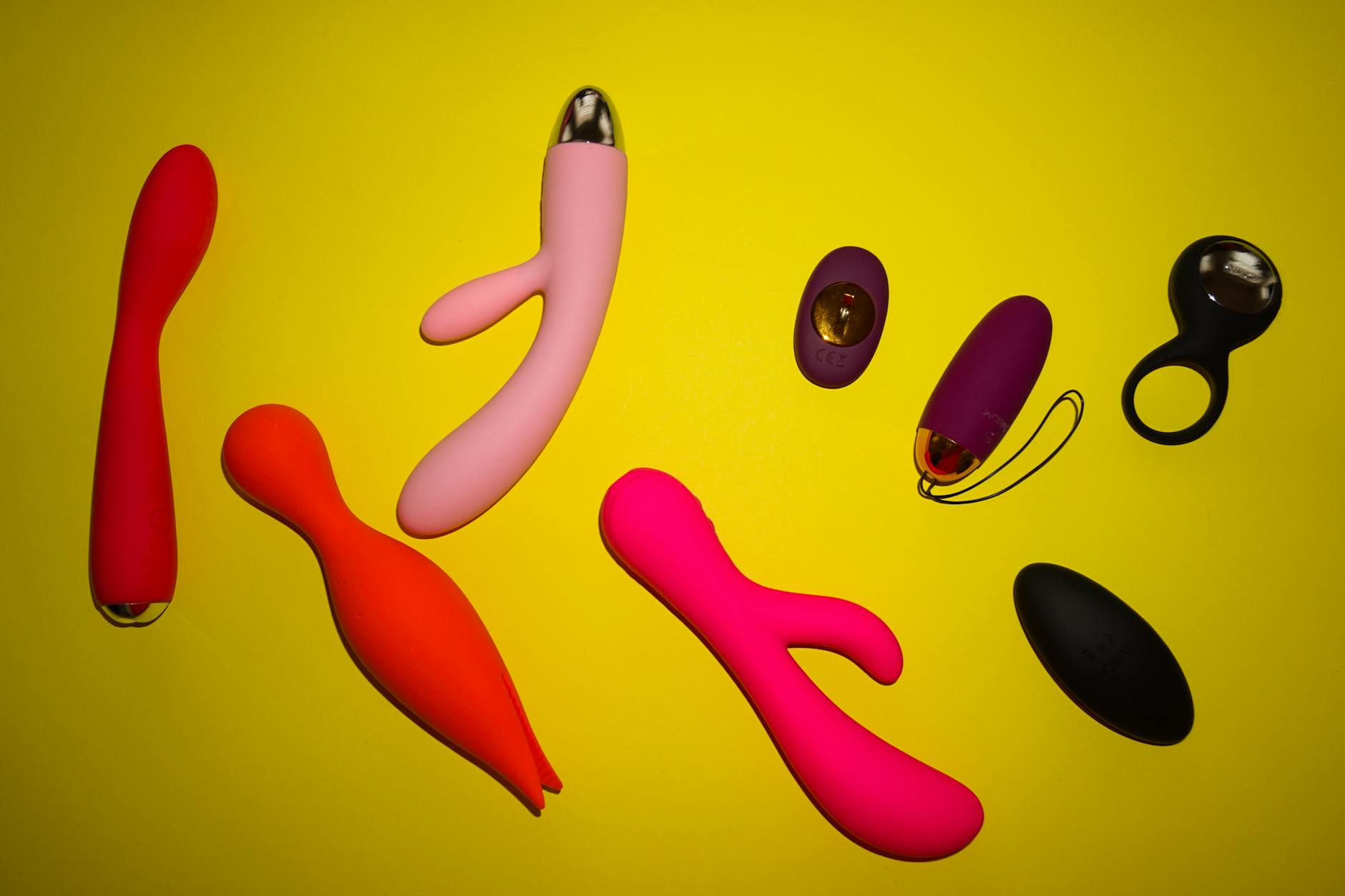
Let's start with the obvious part
Your body at 40 is not your body at 25. That's not a loss. It's information. When you pick up a Lemon vibrator for the first time in midlife, the experience lands differently than it would have decades ago, and understanding why matters more than you'd think.
The sensation, the nervous system response, the emotional permission you give yourself, the tissue sensitivity, the way your brain processes pleasure. All of it shifts. And most of it shifts in your favour.
What's different physiologically (and why it's not what you think)
Here's what actually changes as you move through your forties:
Estrogen shifts (it's still present, just fluctuating more). Blood flow to the vulva is slower to build, which means arousal takes longer. The clitoral tissue is slightly less engorged during rest, which changes how initial stimulation feels. Your skin is drier overall, including in the vulva area, which is why water-based lubricant becomes genuinely useful rather than optional.
But here's the critical part: none of these changes reduce your capacity for pleasure. They redirect it.
When you're younger, arousal can feel almost involuntary. A thought, a touch, and your body responds in seconds. By 40, that automatic response often quiets down. You have to actually choose pleasure. You have to intend it. For a lot of women using a clitoral vibrator for the first time in midlife, that intentionality is the real shift, not the tissue sensitivity.
Why starting with air-suction vibrators works so well at this life stage
A traditional vibrator works by moving back and forth or side to side against the clitoral tissue. That mechanical friction is fine at any age, but it requires direct contact sensitivity that thins a little over time.
Lemon vibrators use air-suction technology. They create a gentle seal around the clitoral area and pulse that seal, which stimulates the entire clitoral structure (the parts you see and the parts you don't) without relying on surface friction alone.
For someone picking up their first vibrator at 40 or later, this matters because:
The sensation builds gradually rather than jolting you. Your nervous system has decades of learned tension patterns. Slow stimulation helps you notice and release those patterns rather than triggering a protective response. Suction feels less like something happening to you and more like something drawing sensation out of you, which is psychologically different and often more accessible for first-time users who've spent their lives policing their own pleasure.
The intensity is easier to control. You start at pattern 1 (barely detectable) and work up. Most midlife first-time users need that runway time. Your nervous system isn't used to this kind of stimulation. You're essentially retraining your body's pleasure response, and that takes intentional, gentle progression.
Why you might feel nothing at first (and that's completely normal)
Your first time using a lemon clitoral vibrator, you might feel barely anything. You might feel something distant, barely localized. You might feel frustrated that this is what the fuss is about.
That's not a failure. That's your nervous system waking up.
If you've spent 40 years learning to ignore or minimize your own pleasure for any reason (social conditioning, a partner's preference, distraction, life stress), your body has gotten good at not noticing sensation in that area. The clitoral nerves haven't forgotten how to respond. Your brain has just learned to dismiss the signal.
Using the Lem or another suction vibrator works because it's insistent without being aggressive. You can't really ignore it the way you could a thought or a feeling. But it's gentle enough that you're not flooded. You're learning the sensation at your own pace.
Most people feel a real difference between the first session and the fifth. By the tenth, the sensation landscape has usually shifted noticeably. Your nervous system is recalibrating.
The emotional piece (which might matter more than the physical)
When you're 25 and curious about vibrators, there's often shame attached, or secrecy, or a sense that you're supposed to need a partner involved. By 40, a lot of that noise quiets down.
You know yourself better. You know what you actually want versus what you thought you were supposed to want. You're more likely to carve out time for yourself without guilt. You might have more financial autonomy to buy something for your own pleasure without explaining it to anyone.
For a lot of first-time users over 40, the emotional permission is actually the bigger unlock than the physical sensation. You're not trying a vibrator because you think you should. You're trying it because you actively want to explore your own pleasure.
That intention changes everything. Your nervous system knows the difference between curiosity and shame. Curiosity opens the system. Shame closes it.
How to set yourself up for success
If you're trying your first lemon vibrator in midlife, here are four actual things that matter:
Budget time without pressure. You're not trying to orgasm on a schedule. You're learning. Set aside 20 to 30 minutes when you won't be interrupted and don't have anywhere else to be. Your nervous system needs that safety to open up.
Start with lubrication. Water-based lubricant isn't because something's wrong with you. It's because the suction seal works better with a little moisture, and it also signals to your nervous system that you're choosing pleasure. There's something psychologically important about preparing your own body.
Begin at the lowest setting and stay there. The Lem has multiple patterns and intensities. Spend at least 5 to 10 minutes on pattern 1. Notice what you feel. Explore the edge of sensation before you turn it up. Most first-time users in midlife get more out of extended low-intensity exploration than they do from jumping to high settings.
Let sensation come and go without judgment. Your nervous system might feel pleasure, then go quiet, then come back. That's not a failure. That's normal. Stay curious about what changes, what stays consistent, how your body responds over multiple sessions.
When sensation deepens (the part that surprises most people)
Somewhere between the third and tenth session, something usually shifts. The sensation goes from external (something moving against my body) to more internal (something lighting up inside my body). Your nervous system is establishing new pathways.
People often report that their orgasms feel different after they start using a suction vibrator. Less intense in some ways, more whole-body in others. Some people say they feel more localized sensation. Others describe it as more of a wave than a spike.
Your baseline of what pleasure feels like updates. And honestly, for a lot of people over 40, that update feels like permission they didn't know they needed.
If you're in a relationship, this is also the moment to let your partner know what you're discovering, if you want to. Some people find that their own pleasure exploration actually deepens partnership intimacy. Some people find that they just feel better about their own body and that radiates outward.
Staying patient with yourself
You've had 40 years of your own nervous system. You've developed patterns around your body, around pleasure, around what's allowed and what isn't. Retraining that takes consistency, but not obsession.
Using a lemon clitoral vibrator a few times a week for a month teaches your nervous system more than using it once. Consistency matters more than duration.
And sometimes, especially if you're past 40, you might discover that your most satisfying orgasms are still ahead of you, not behind you. Your body knows how to respond now. You've got time. You're not trying to fit it into a narrow window of fertility or youth.
You're just exploring what feels good to you, on your own terms, in your own body. That's always worth the time.
FAQs
Why does it take so long to feel sensation when I'm over 40?
Your nervous system has decades of learned patterns around noticing or ignoring sensation in that area. It's not that the nerves have gone numb. Your brain has learned to dismiss the signal. Using a suction vibrator consistently helps rewire that. Most people notice real changes within three to five sessions as their nervous system recalibrates and stops dismissing the sensation.
Can I use a lemon vibrator if I've never had an orgasm?
Yes. Many people who've never experienced orgasm find that air-suction vibrators make it more likely because the suction stimulates the whole clitoral structure, not just the surface. You're working with your body's full nerve network. That said, if you've never had an orgasm, the first few sessions are about learning sensation, not achieving orgasm. The orgasm often comes once your nervous system is more awake.
Does using a vibrator make it harder to orgasm with a partner?
No. The opposite often happens. When you know how your own body responds, you can communicate better with a partner about what feels good and what doesn't. The nerves respond to vibrators and hands differently, so they're not in competition. Using a vibrator for solo pleasure often improves partnered sex because you understand your own pleasure better.
What if I still feel nothing after several sessions?
That can mean a few things. You might need a longer warm-up time. You might need to explore different areas around the clitoris (not everyone's most sensitive spot is the clitoral head). You might benefit from a longer session at a very low intensity rather than advancing to higher patterns. Or you might be experiencing what's called sexual anhedonia, which can happen with stress, medication, or hormonal shifts. If sensation doesn't develop after consistent exploration over several weeks, it's worth checking in with your doctor or a sex therapist.
Is water-based lubricant really necessary?
For air-suction vibrators like Lemon vibrators, yes. The suction creates a seal, and lubrication helps that seal work better and feel better. Water-based lube won't damage silicone toys and won't leave residue. It also signals to your nervous system that you're intentionally preparing your body for pleasure, which matters psychologically.
Should I tell my partner I'm using a vibrator?
That depends on your relationship and your comfort. Some couples find that exploring pleasure individually strengthens their connection because each person understands their own body better. Some people prefer privacy. There's no universal right answer. What matters is that you're choosing for yourself, not hiding out of shame or withholding out of punishment.
Starting to explore your pleasure in midlife is a completely different experience than exploring it younger. Your body knows more. Your nervous system is more complex. Your permission is more grounded. A lemon clitoral vibrator isn't just a tool. It's an invitation to yourself to pay attention to sensation, to honor your own pleasure, and to trust your body to know what it needs. That's the real shift that happens when you start exploring at 40 or beyond.