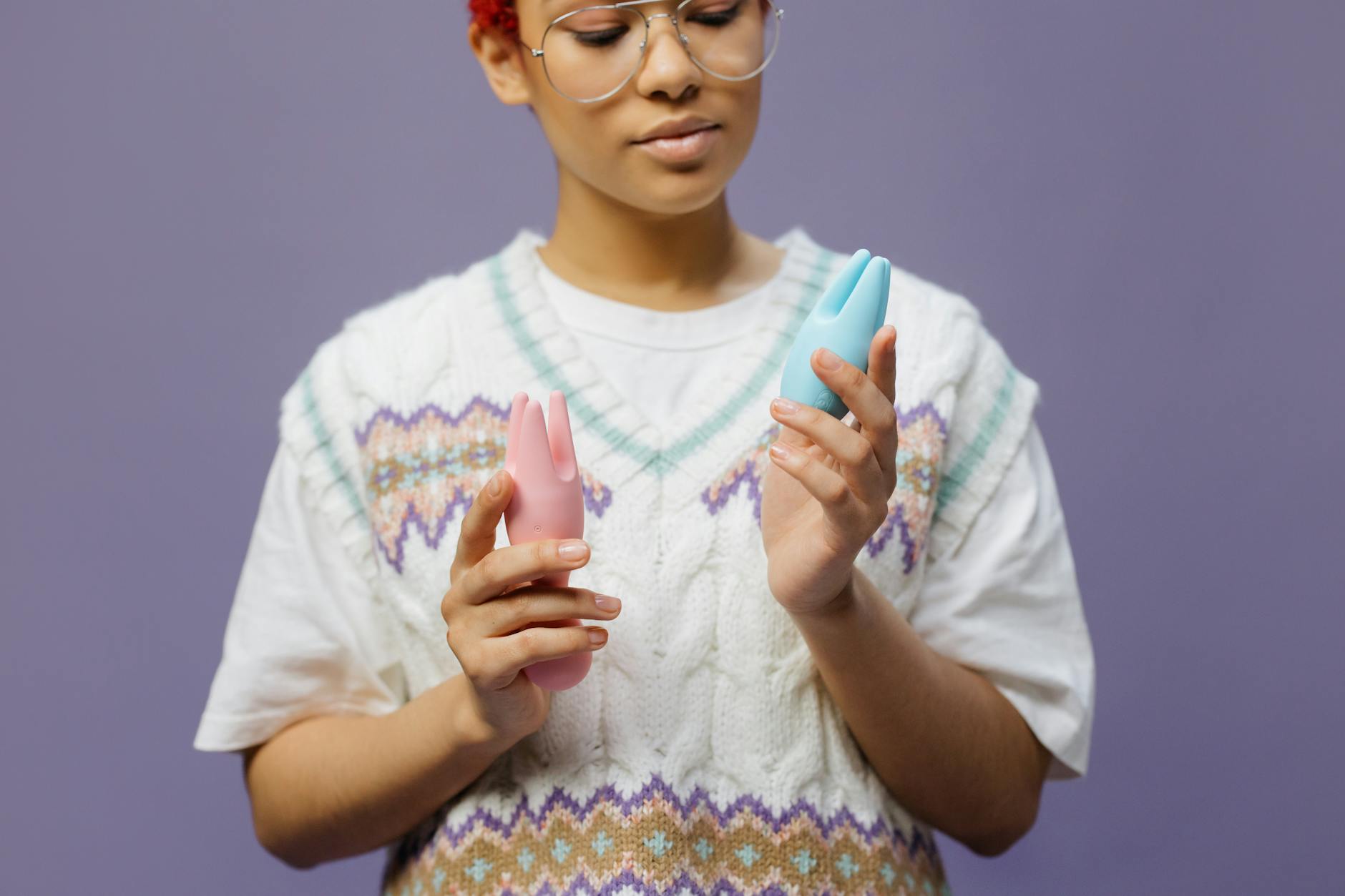
Let's be real about introducing toys to a partner
Most couples want to introduce pleasure toys. Fewer actually do it. The gap isn't about desire or openness. It's about the conversation feeling high-stakes, the timing feeling wrong, or the fear that asking will come across as "you're not enough for me."
Here's the truth that changes the game: a lemon vibrator isn't about replacing anything. It's about addition. And when you frame it that way, most partners understand.
Why now is often the right time
You're already thinking about it. That matters. Most people who successfully introduce toys to their relationship do so because one partner brought it up after thinking about it for months or longer. The curiosity doesn't go away. It sits under the surface, affecting your confidence and intimacy in subtle ways you might not even notice until you've had the conversation.
Research on couples and sexuality shows that partners who actively explore together report higher satisfaction and stronger emotional connection. This isn't anecdotal. It's consistent across decades of relationship data. The act of exploring new territory together, even something as simple as a lemon clitoral vibrator, rebuilds some of the novelty and presence that long-term relationships naturally lose over time.
The other timing piece: if your sex life has grown quiet or routine, that's actually the ideal moment. A new toy doesn't fix underlying disconnection. But it can be the catalyst for the conversation that does.
The setup conversation
Don't ambush. Don't frame it as a solution to a problem. Instead, approach it as something you've been curious about and want to explore together.
The opening matters. Try something like:
"I've been thinking about something and I wanted to run it by you. I'd like to explore using a toy together. Not because anything's wrong. More because I think it could be fun, and I'm curious about what it would feel like for both of us."
Notice what's happening here. You're naming the thing directly (no dancing around it). You're owning the desire ("I've been thinking"). You're inviting partnership ("together," "both of us"). You're separating from fear ("not because anything's wrong").
Then stop talking. Let them respond.
Common reactions and how to handle them:
If they seem hesitant: "What's the hesitation? I'm curious what you're thinking." Listen without defending. Most hesitation comes from feeling insecure, not from actual objection.
If they're immediately interested: "Great. Let's talk about what sounds appealing to you, and we can explore options together."
If they say "I'm not sure": "That's fair. There's no rush. But I'd love to talk about what would make you feel more open to it. Is it the idea of the toy itself, or something else?"
Why a lemon vibrator makes this easier
A lemon clitoral vibrator has specific advantages for couples navigating this for the first time. Unlike penetrative toys or wearables, it's clearly for external pleasure. It's compact. It doesn't require any position changes that might feel intimidating. And psychologically, the suction sensation feels different enough from manual touch that it registers as genuine exploration, not replacement.
Many partners find that using a lemon vibrator together actually makes them feel more connected, not less. Because the focus is on sensation and response, not on performance. You're watching your partner discover something new. There's tenderness in that.
The first time together
Timing and setting matter enormously. Don't introduce it during sex when you're already invested in one outcome. Instead, set aside time when you're both rested and you have space to talk if needed.
Start slow. One partner using the toy while the other partner is present and engaged. This removes the pressure of simultaneous activity. You're learning together what feels good, what settings work, what the experience is actually like beyond the fantasy of it.
If you're using it externally on a vulva, the intensity settings on a Hello Nancy lemon vibrator are designed to build gradually. Starting at the lower settings lets you both understand the sensation before moving up. There's no rush to intensity. In fact, many couples find that the middle settings feel best and spend most of their time there.
Talk during it. Not in a clinical way. But "that feels good" or "I like when you move it there" or "this sensation is different than I expected" all matter. You're both getting information. You're both building comfort.
Managing the emotional undercurrents
Sometimes introducing a toy surfaces feelings neither of you knew were there. One partner might feel inadequate. Another might worry about becoming dependent on the toy. Someone might feel uncomfortable about being watched, or about watching.
These feelings are normal. They're not a sign you shouldn't do this. They're information. When they come up, pause and name them.
"I notice I'm feeling a little insecure. That's on me, not on you. But I wanted to be honest about it." That's an adult conversation. It builds intimacy instead of creating distance.
The partner hearing this doesn't need to fix it immediately. They need to acknowledge it. "I hear you. That makes sense. And for what it's worth, I'm doing this because I want to explore with you, not because anything's missing."
Making it a regular part of your intimacy
After the first time, let there be space before the second time. Not weeks of avoidance. But a few days. This gives both of you time to process and come back to it with fresh perspective.
When you do use it again, you might discover that the experience changes. Maybe it felt awkward the first time and comfortable the second. Maybe you want to explore different settings or positions. Maybe one of you wants to focus on giving pleasure with the toy while the other partner receives.
Ask what worked and what didn't. This is actually where couples who actively communicate about pleasure build the strongest intimacy. You're treating your partner's pleasure as something worth understanding in detail. That matters.
What if they still say no
Some partners genuinely aren't interested in toys. That's their boundary, and it deserves respect. But there's often a difference between "I'm not interested in toys" and "I'm not interested in exploring that right now."
If they're firm in the no, let it go. But if it's a "not right now," you can revisit it later. People's comfort with sexuality changes over time. Especially if you create safety through these conversations and through respecting their no when they give it.
Your own pleasure doesn't depend on your partner's participation. You can explore alone. If you're doing that, there's zero obligation to tell them about it unless you want to. Solo exploration and partnered exploration are different experiences with different values.
The conversation about pleasure styles
Introducing a lemon vibrator often opens a door to bigger conversations about what pleasure actually means to each of you. One person might be stimulation-focused. Another might care more about emotional connection. One might love intensity. Another might prefer slow and sustained sensation.
These conversations are where real sexual satisfaction lives. Not in the toy itself. In the willingness to learn what your partner actually needs and to build that together.
Many couples find that after introducing something like a lemon clitoral vibrator, they start talking about other parts of their intimate life they'd never discussed. What positions feel best. What times of day work. What kind of touch connects versus what feels obligatory. This is relationship building at its deepest level.
FAQ
How do I know if my partner will be receptive?
You don't until you ask. And that's okay. The conversation itself often matters more than the initial reaction. Partners who feel respected in their hesitation often become curious later. Partners who feel ambushed or pressured usually become more resistant.
What if I'm worried they'll think I want to use it instead of being intimate with them?
Lead with that directly. "I've been thinking about exploring using a toy together, not instead of our usual intimacy. More like an addition to what we already do. Does that land differently for you?" Many partners feel reassured once they understand it's additive, not replacement.
Is there an age when introducing toys becomes more or less acceptable?
Not really. Couples in their twenties and couples in their sixties use toys together successfully. What matters is comfort, communication, and consent. If anything, older couples often report more confidence having these conversations because they've built years of trust and stopped worrying about what's "supposed" to happen.
Can using a toy together change the dynamic of our relationship in a bad way?
It can if one partner feels pressured, or if there's underlying resentment that the toy exposes. But used with genuine curiosity and respect, it usually strengthens connection. You're literally exploring vulnerability together. That builds intimacy.
What if we try it and it's uncomfortable or awkward?
Most first times are. You're learning new territory. Awkwardness is normal. If it stays awkward on the second or third try, then you might pause and talk about what's creating that. But one awkward experience doesn't mean it's not worth exploring further.
How do I bring this up if we haven't talked about sex in depth before?
Start simple. "I've noticed we don't talk much about what we each enjoy sexually. I'd like to change that. And one thing I've been curious about is using a toy together. Would you be open to exploring that?" You're opening two conversations at once. Let them each be separate.
The real reason couples do this
Longer partnerships naturally need novelty, not because anything's broken, but because humans adapt. The same kiss, the same touch, the same setting slowly becomes background noise. A lemon vibrator, or any new toy, isn't about fixing your relationship. It's about reminding each other that there's still discovery available. That you can still surprise each other. That pleasure is worth prioritizing together.
When you approach it that way. With honesty, respect, and genuine curiosity. Most partners find that the conversation itself becomes intimate. And that's where real connection happens. Not in the tool. In the choice to explore together.