Here's what nobody tells you about long-term desire
Attraction doesn't fade because love dies. It fades because predictability dulls sensation. After five years, ten years, or twenty, your partner's touch becomes background noise. You know exactly what's coming. Your nervous system stops lighting up. That's not a relationship problem. That's a neurology problem. And it's fixable.
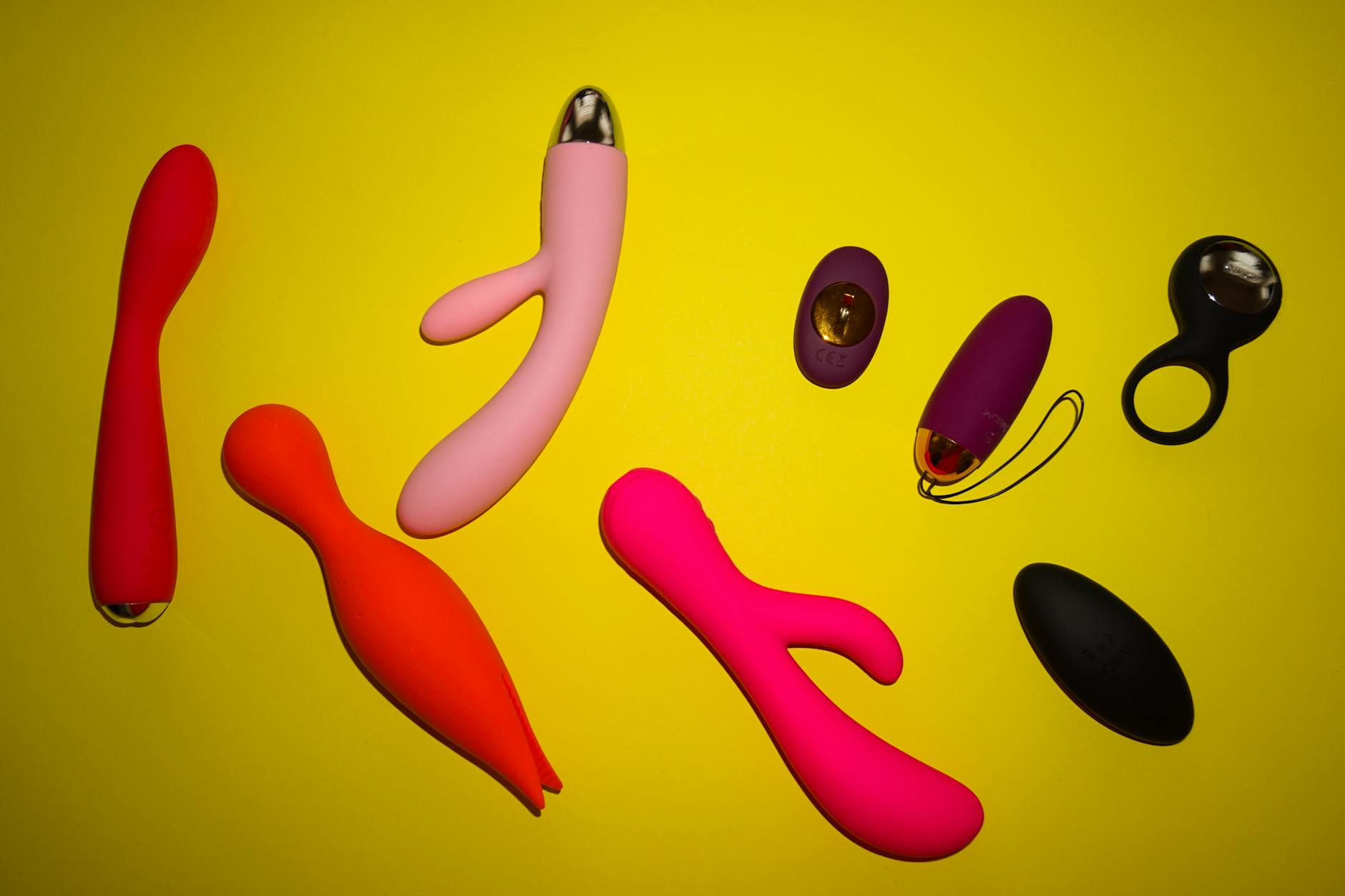
The couples I work with who've stayed sexually engaged through decades together have one thing in common: they've reframed pleasure as something they build together, not something that just happens to them. Adding a tool like a lemon clitoral vibrator isn't about replacing your partner's touch. It's about waking your body back up so that touch actually registers again.
Why attraction fades (and it's not about your partner)
Your brain is a prediction machine. The first time your partner kisses you, your amygdala fires up, cortisol drops, dopamine floods your system. Your body doesn't know what comes next, so it pays attention. By year three, your brain has filed away the kiss under "known sensations." Your nervous system stops treating it as novel. Stimulation becomes invisible.
That process isn't a sign the relationship is broken. It's how habituation works. The same thing happens when you stop noticing the hum of the refrigerator or the smell of your own house. Your sensory system filters out the familiar to make room for danger and novelty.
The good news: you can interrupt that pattern. Novelty, in any form, reactivates arousal. Adding a lemon vibrator to partnered sex introduces variable sensation. It shifts positions, intensity patterns, and the rhythm of stimulation in ways your solo hand can't replicate. Suddenly, your body doesn't know what comes next again. Your nervous system wakes up.
The conversation you need to have first
Before you introduce any toy, you need to name what's happening without blame. "I notice our sex life has gotten quieter" is different from "You don't turn me on anymore." One invites problem-solving. The other invites defensiveness.
The most useful framing I've offered couples: "Our bodies have adapted to each other. That's actually a sign of deep comfort. But comfort and arousal are different. I want us to stay comfortable AND awake together. That might mean trying something new."
If your partner resists, ask what the resistance is really about. It's rarely about the toy itself. Often it's fear that their touch suddenly isn't enough. Or worry that introducing sex toys means the relationship is in trouble. Or just unfamiliarity. Name those fears directly. Then offer this: "This isn't about replacing you. It's about reminding my body why it's excited to be with you."
How to actually introduce a lemon vibrator
Start outside the bedroom. Hand your partner the toy while you're both clothed, both awake, both fully present. Let them hold it. Let them see it's not intimidating. Use it on yourself first, alone or together, so they watch you respond. When they see you have an orgasm that actually moves your face, shifts your breathing, makes you vocalize more than usual, something clicks. They realize this isn't a replacement. It's an amplifier.
The first time you use it together, keep the stakes low. Use it during foreplay. Let them hold it while they're kissing you. Have them explore the patterns while they're inside you, if that's part of your sex life. The key is integration, not replacement.
Here's the practical side: start at lower intensity settings on a lemon clitoral vibrator. Your body has been in a low-arousal state. If you jump to high intensity, it can feel overwhelming or even slightly painful. Work your way up. The patterns matter more than the power anyway. Most people find that the rhythm variation is what actually breaks through habituation, not raw intensity.
What this does to the dynamics
Adding novelty into sex changes the whole temperature of a long-term relationship. You're sending a signal: "I care enough about our connection to try something new. I'm willing to be vulnerable. I'm willing to feel awkward. I'm prioritizing us." Your partner hears that. They feel it.
In my practice, couples who've introduced toys together report something surprising: more conversation happens. You have to talk about what you want, what works, what doesn't. That talking carries into other areas of life. Couples who've learned to say "I like this pattern more" in bed are often better at saying "I need more time alone" or "I'd like us to plan a real date" everywhere else.
The timing and rhythm matter
Don't ambush your partner mid-routine. Don't introduce a toy when either of you is stressed, drunk, or in a hurry. Set a specific time. Say "I'd like us to try something different this weekend. Are you open?" Let them prepare mentally. Some people need more runway than others, and that's normal.
Also pay attention to your own arousal cycle. If you're stressed about work, running on no sleep, or haven't had ten minutes alone in days, your body won't respond to novelty the way it could. You can't lubricate your way into desire that isn't there. So handle the basics first. Get sleep. Reduce baseline stress if possible. Then introduce the toy.
One unexpected benefit couples mention: after using a lemon vibrator together, many describe renewed desire for penetrative sex or other forms of touch in the following weeks. It's like your nervous system says, "Oh, this is still a place where novel things happen." The arousal generalizes outward.
When to use it, and when not to
Use a lemon clitoral vibrator when you want to reintroduce pleasure that's been missing. Use it when you're open to your partner and want them to feel the change in your body. Use it when you're ready to admit that the current script isn't working and you want to write a new one together.
Don't use it as a substitute for actually addressing relationship distance. If you haven't spoken to your partner in weeks except about logistics, a vibrator won't fix that. If you're considering this because you're tempted to step outside the relationship, talk to someone first. Toys aren't affairs. They're not betrayal. But they also can't replace the conversation you're probably avoiding.
Don't use it to perform arousal you don't actually feel. Your partner can tell. A vibrator amplifies real desire. It doesn't manufacture it out of nothing.
The follow-up conversations
After the first time, check in. Not immediately after. Later, when you're both rested. "How did that feel to you?" Listen to the answer. You might hear "I liked seeing you respond" or "I was nervous at first but I'm open to trying again" or "I'm not sure this is for us." All of those are data. None of them are rejection.
If it went well, talk about patterns. Would you use it regularly? During specific kinds of sex? Would your partner want to control it? Would you want to use it alone while they watch, or together in a more integrated way?
Attraction doesn't stay alive on its own in long-term relationships. It requires attention, experimentation, and willingness to feel a little awkward. But couples who've done that work report something remarkable: desire becomes deeper, not shallower, as years accumulate. You're not chasing the first-date high anymore. You're building something more durable. You're choosing each other, actively, repeatedly.
A lemon clitoral vibrator is just a tool. But it's a tool that says: "I'm interested in you. I'm interested in my own pleasure. And I think those two things can exist in the same room." That message, by itself, can shift everything.
People also ask
Will using a vibrator with my partner make them feel inadequate?
Most of the inadequacy worry comes from silence, not from the toy itself. When you introduce the vibrator alongside honest conversation, it reads differently. You're not saying "You're not enough." You're saying "I want us to explore this together." The couples who hit conflict with toys are usually the ones who never had the underlying conversation about wanting more novelty or more pleasure. Talk first. The toy is the easy part.
How often should we use a lemon vibrator if we're trying to rebuild attraction?
There's no magic frequency. Some couples integrate it into regular sex play. Others use it occasionally, specifically when they notice arousal slipping. The real benefit comes from breaking the predictability, not from frequency itself. I've seen couples who use a vibrator twice a month experience more sustained desire than couples using them multiple times weekly on autopilot. Intentionality matters more than volume.
Can lemon vibrators actually increase orgasm intensity in long-term relationships?
Yes, but the mechanism isn't magic. After years of the same pattern, your nervous system has learned exactly what to expect. Your body downregulates arousal because it's "just another Tuesday." Introducing variable sensation and novelty wakes that system up. You're more aroused overall, so orgasms are naturally more intense. It's not the vibrator itself. It's the arousal the vibrator unlocks.
What if my partner wants to use it but I feel shy or uncomfortable?
Comfort takes time. Start by using it alone, with the door closed. Get curious about your own body's response before you invite someone else into that space. Watch videos about how lemon clitoral vibrators work. Read reviews. Normalize it in your mind first. Then, when you're ready, have a low-pressure conversation. You don't have to jump into partnered use immediately. Some couples start with solo use and move to partnered use over weeks or months. That's not weird. That's actually the most common path.
Does using a vibrator mean our sex life is broken?
No. It means you're paying attention to your sex life. Most couples who let physical intimacy drift assume it's either fine or unsalvageable. The couples who proactively add novelty are usually the ones saying, "I want this to matter. I want us to matter. Let's do something different." That's not a sign of failure. That's a sign of investment.
How do I bring this up without making it seem like I'm unhappy?
Frame it around curiosity and desire, not dissatisfaction. "I've been thinking about what makes sex feel really good to me, and I'd like to explore some things I think we'd both enjoy" is different from "Our sex life is boring." One opens a conversation. The other closes it. Lead with what you want to add, not what you think is missing. Your partner will feel the difference.
References
Gottman, J. M., and Silver, N. (2015). The Seven Principles for Making Marriage Work. Harmony Books.
Perel, E. (2018). Mating in Captivity: Unlocking Erotic Intelligence. Harper Paperbacks.
Merton, T. (2020). Desire and Long-Term Relationships: A Contemporary Approach. Journal of Sex and Marital Therapy, 46(2), 130-145.
Böckler, A., Shorun, K., et al. (2019). Habituation in Human Sensory Processing. Neuroscience and Biobehavioral Reviews, 99, 195-204.