How to Use a Lemon Vibrator With Your Partner: Communication and Pleasure Guide
Let's be real. Bringing a lemon vibrator into your sex life with a partner can feel loaded. Will they take it personally? Will it feel clinical? Will the moment get awkward before it gets good? These are the questions nobody wants to ask, so most people just don't.
Here's what I've learned from years of working with couples: the vibrator itself isn't the hard part. Communication is. And communication is fixable.
Why partners worry (and what's actually true)
Most of the anxiety around introducing a clitoral vibrator comes from one of three myths.
Myth 1: "They'll think I'm not satisfied with them." False. A lemon vibrator isn't a critique of your partner's skills. It's a tool for your body's pleasure, the same way a shower head or a pillow matters. Would you assume your partner finds you boring because they use lube? No. Same logic applies.
Myth 2: "It means the relationship is broken." Also false. Couples who explore pleasure together have better sex and better relationships overall. This is consistent research across decades of relationship science. A vibrator is often a sign of curiosity and care, not a symptom of disconnection.
Myth 3: "It will replace them." No. A lemon vibrator does one thing really well: create consistent pressure and suction on your clitoris. Your partner can't be replaced by a silicone toy because they do something no toy ever will. They offer presence, touch, emotional intimacy, and responsiveness. A vibrator handles the mechanical part. Both matter, and they're not in competition.
Understanding these distinctions before you have the conversation makes everything easier.
The conversation that actually works
Timing is half the battle. Don't bring this up during sex, immediately after sex, or during a conflict. Pick a calm moment when you're both relaxed and there's no time pressure.
Start with curiosity about them, not defense of yourself. "I've been thinking about something that might be fun for us" works better than "I want to try a vibrator because my orgasms are hard to get." The first invites exploration. The second sounds like you're announcing a problem.
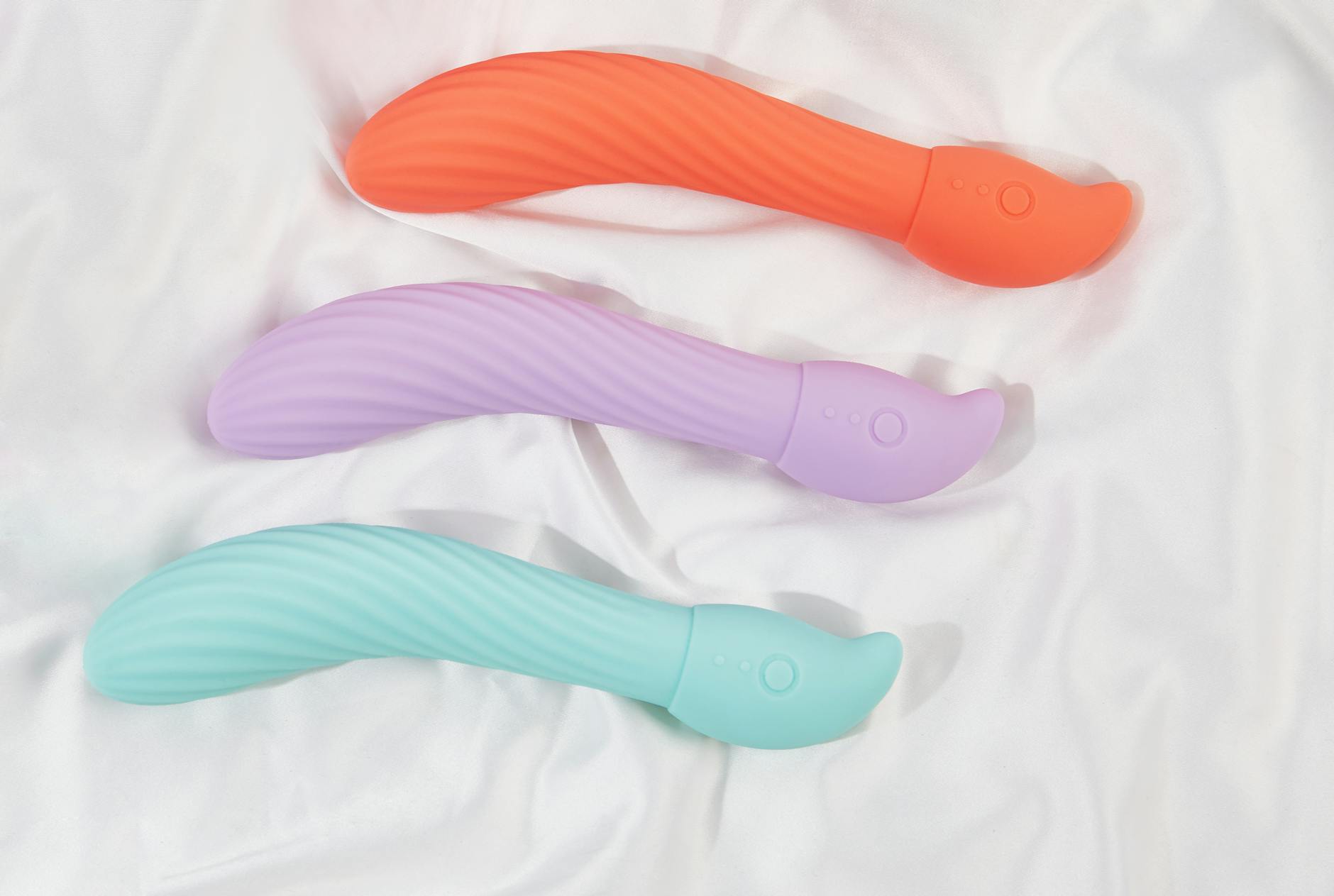
Use specific language. Say you want to try a lemon clitoral vibrator, not just "a toy." Names matter. The Lem by Hello Nancy isn't a mystery product; it's a specific device with a specific design and a specific function. That concrete detail actually feels less threatening than vague references to "that thing."
Be honest about why. Maybe you're curious about how suction feels compared to vibration alone. Maybe you read something and got intrigued. Maybe you want to find positions where you can come more easily. Any of these reasons is valid and worth saying aloud. Your partner deserves to understand what's actually driving this, not guess.
Then pause and listen. Ask what they think. Are they excited? Nervous? Curious? Their response tells you what reassurance they need.
Making the first experience actually work
Once you've talked about it, the execution matters. Here are the specifics.
Start solo first. Before using a lemon vibrator with your partner, spend time with it alone. Get comfortable with the settings, understand how it feels on different parts of your body, and figure out what pattern actually works for you. This serves two purposes. First, you'll know what to ask for. Second, you'll feel confident, not self-conscious, when your partner is watching.
When you do use it together, some couples do better with the vibrator as an addition to partnered sex, not a replacement. Your partner can use it on you while you're kissing, touching each other, or having sex. This keeps them involved and turns it into a shared experience rather than a solo activity that happens to occur while they're in the room.
Others prefer to use it during masturbation while their partner watches and touches them elsewhere. That works too. The key is knowing in advance which approach feels right for you both, so there's no awkward negotiation in the moment.
Start with lower intensity settings. Clitoral vibrators and suction devices can feel intense, especially if you're new to them. Beginning at pattern 1 or 2 gives you room to build and keeps the sensation from overwhelming your nervous system.
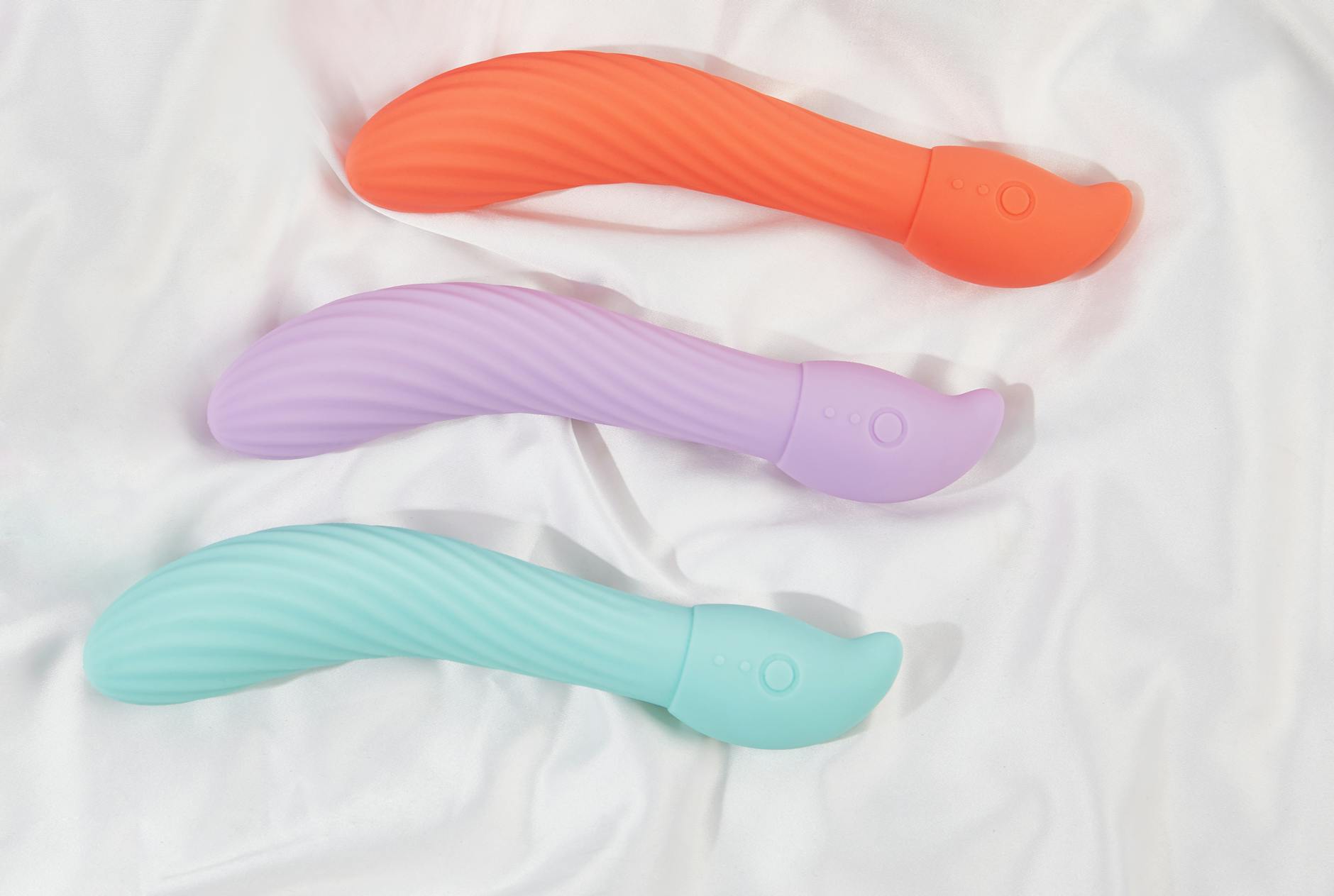
Photo by IFONNX Toys on Pexels
The emotional layer that people skip
Here's something I tell couples all the time: introducing a vibrator is introducing a vulnerability. You're saying, "This is what my body needs to feel good." That's not a small thing. It requires trust and a certain kind of openness that doesn't come naturally to everyone.
Your partner's job is to receive that vulnerability without defensiveness. Not as a threat. Not as proof they're not enough. But as useful information about how your body works. The best partners say things like "I love that you know what you need" or "I'm excited to figure this out with you."
If your partner struggles with this, that's worth a bigger conversation, possibly with a therapist. A partner who can't embrace your pleasure without it becoming about their ego is showing you something important about the relationship.
But most partners, given clear information and reassurance, come around quickly. They often end up enjoying it because they get to see you experience intense pleasure, and that's usually more exciting than threatening once the initial strangeness wears off.
When to use it and how to make it part of your rhythm
Some couples use lemon vibrators every time. Others use them occasionally, when one partner specifically wants that kind of stimulation. There's no schedule you have to follow.
Many people find that using a clitoral vibrator earlier in partnered sex, rather than at the very end as a finish line, actually improves the whole experience. You're more present and less goal-focused when you're not desperate to come. That sounds counterintuitive, but most people who try it understand immediately.
If you're using a lemon vibrator after childbirth, the same partnership principles apply, except add communication about physical recovery and comfort. Your partner should know when you're ready, what feels safe, and that this has nothing to do with them.
For long-distance couples, lemon vibrators and sexual toys open up possibilities that didn't exist before. You might use one together during video calls, or send photos, or talk about how it felt. Lemon vibrators for long-distance relationships are often less about the device itself and more about the shared intimacy it creates across distance.
Building a shared pleasure language
Once you've used a lemon clitoral vibrator together a few times, start noticing what works. Does your partner like using it on you? Do you like it better when they control the speed? Does it feel better at certain angles? Do you prefer it as part of foreplay or as part of intercourse itself?
These observations become your shared sexual vocabulary. "Remember when I had it on pattern 3 during that time?" becomes shorthand. "Try moving it slightly to the left" becomes something you can actually say without overthinking it.
This is where the real intimacy happens. Not in the introduction, not in the first awkward use, but in the ordinary back-and-forth of figuring out what works together. That's trust building in real time.
If you want to deepen this further, communication about lemon vibrators with your partner is actually a gateway to better communication about other aspects of pleasure and desire. Once you've named the thing that feels good, naming other things gets easier.
The practical stuff nobody mentions
A few logistics. Keep your vibrator clean and stored somewhere you're both comfortable knowing about. Secrecy adds shame that doesn't need to be there. A drawer in the nightstand is fine. You're adults. You're allowed.
If you're using a water-based lubricant with your lemon vibrator (which helps with comfort and sensation), keep it nearby during partnered sex. You're not going to want to pause and hunt for it mid-moment.
Talk about battery life or charging. Nothing kills a moment like the Lem losing power halfway through. Knowing you've got a fully charged device beforehand removes one more small source of friction.
And if something doesn't feel good, you're allowed to stop. You're allowed to say "Not tonight." You're allowed to change your mind about what you want to try. Consent is ongoing, not a one-time conversation.
When it's about more than the vibrator
Sometimes a couple introduces a vibrator and discovers that the problem wasn't the vibrator at all. Maybe one partner realizes their lack of desire isn't about the vibrator. Maybe another realizes they've been disconnected for longer than they thought. Maybe someone discovers that they actually prefer solo pleasure to partnered pleasure, and that's fine too.
A lemon vibrator doesn't fix broken communication. It just makes the communication more honest. If you use one and it surfaces bigger issues, that's actually useful information. It's telling you where to focus attention.
But in most cases, when two people who are curious and committed talk clearly and try something new together, they end up closer. Not because the vibrator is magical, but because they made space for vulnerability and exploration. That's what actually matters.
FAQ: Lemon Vibrators and Partner Use
What if my partner refuses to use a vibrator together?
That's worth understanding. Ask why. Is it discomfort with toys in general? Insecurity? Religious or cultural beliefs? Genuine lack of interest in that kind of sex? Those are different problems with different solutions. If it's insecurity, you might need a longer conversation or even a therapist. If it's genuine preference, you have a choice to make about whether that boundary works for you. But at least you'll know what you're actually dealing with instead of guessing.
Can I use a lemon vibrator if I'm on antidepressants or other medications?
Yes. Most medications that affect sexual response or sensation don't contraindicate vibrator use. They might change how sensation feels, or how quickly you respond, but that's true whether you're using a vibrator or not. If you're concerned about a specific medication, ask your doctor. But generally, lemon clitoral vibrators are compatible with most medications.
Is using a vibrator during partnered sex going to make it harder for me to orgasm without one?
No. This is a common fear and it's not supported by evidence. If anything, becoming more familiar with what gets you off makes partnered sex better, because you know what to ask for. You might develop a preference for how vibration feels, but that's different than developing a dependence.
How do I introduce this if we've never talked about sex openly before?
Start small. You don't have to have a big serious conversation. You can start with something casual like "I read something about clitoral vibrators and I'm curious" and see where that goes. Sometimes the pressure of making it a Big Conversation actually makes it harder. Let it be normal. Because it is.
What if my partner wants to use the vibrator but I'm nervous?
That's normal. Try it solo first. Use it during foreplay while you're still clothed or partially clothed so it feels less exposed. Ask your partner to go slowly with it. You're in charge. You can say stop anytime. Most nervousness disappears after the first time because the reality is almost always less weird than the anticipation.
Can we use a lemon vibrator if one of us has never had one before?
Absolutely. Neither of you needs prior experience. Just start at a lower intensity setting and go slow. Your partner can learn how to use it on you by watching your responses. That's actually often hotter than if someone came in with prior experience because it's genuinely exploratory for both of you.
The real bottom line
Introducing a lemon vibrator with a partner isn't about the device. It's about creating space for honesty, curiosity, and mutual pleasure. Some couples will use it and love it. Others will try it once and decide it's not their thing. That's all fine.
What matters is that you had the conversation. You named what you wanted. You created room for exploring it together. That's the foundation of good partnered sex, whether a vibrator is involved or not.
Ready to start the conversation? You know what to do. And if you want more specific guidance on how lemon vibrators work or what settings might be best for you, start there. Knowledge kills awkwardness. Come prepared and the rest usually follows.