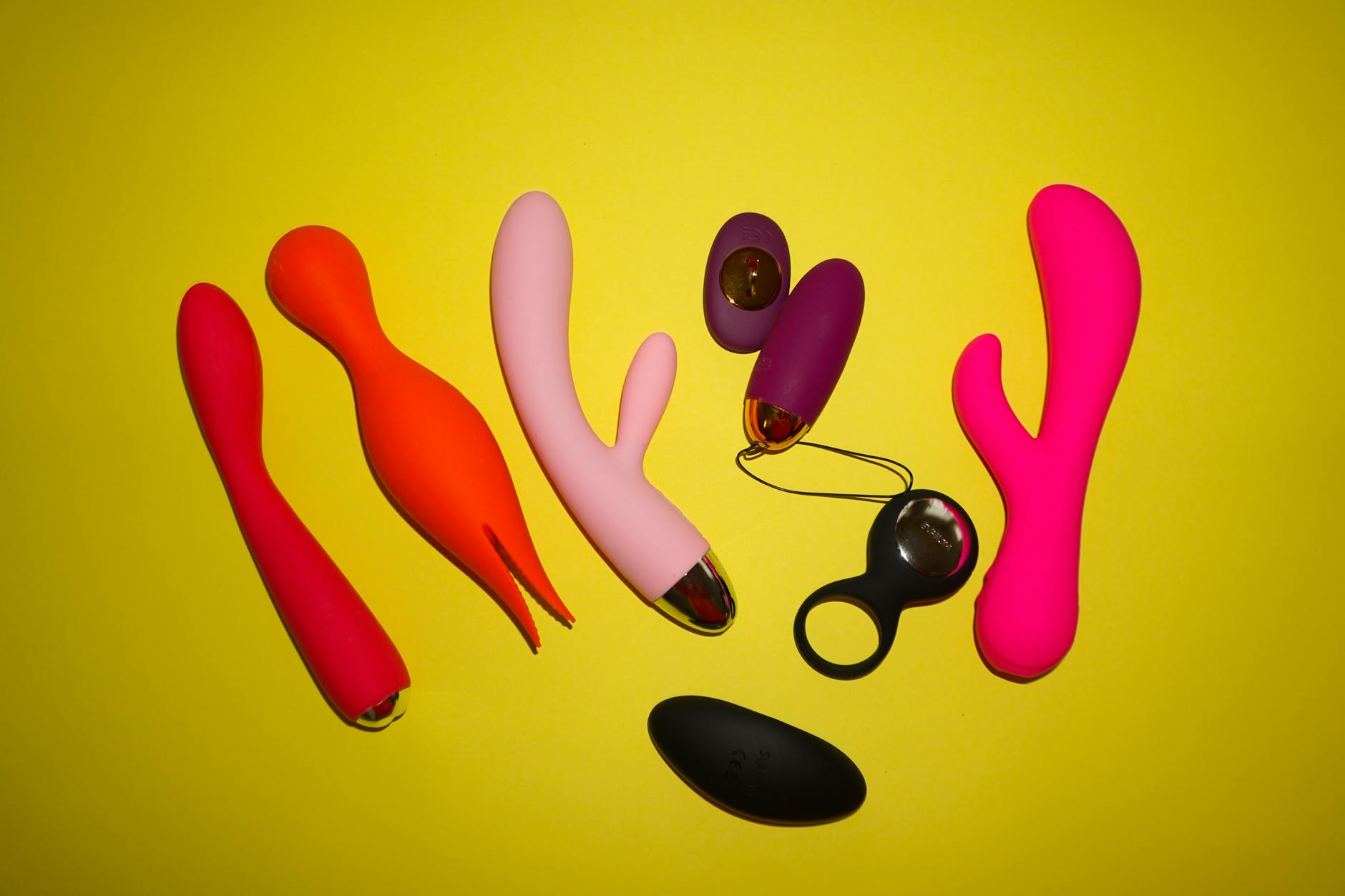
Let's talk about what nobody tells you
You start hormonal birth control expecting one thing: pregnancy prevention. What often catches you by surprise is the shift in how your body responds to pleasure. Some people don't notice. Many do. The changes are real, frustratingly common, and almost never the first thing a doctor mentions during the fitting or prescription conversation.
Here's what's actually happening, and why lemon vibrators often become the missing piece for reconnecting with pleasure after hormonal birth control changes your baseline.
How hormonal birth control shifts sensation
Birth control pills, patches, rings, and implants work by adjusting estrogen and progestin levels. This isn't just about preventing ovulation. These hormones regulate blood flow to genital tissue, lubrication production, and the neurochemical pathways that fire during arousal. They're also connected to dopamine and serotonin, the neurotransmitters that fuel desire itself.
What changes most:
- Clitoral sensitivity often decreases because there's less blood flow during arousal
- Lubrication may be thinner or take longer to build
- Arousal itself can feel slower or less insistent
- Orgasms may feel harder to reach, or feel different when they arrive
The frustrating part? These shifts are dose-dependent and formulation-dependent. A different pill, a different brand, or switching delivery methods (pill to ring, for example) can change everything. Some people report pleasure returning within months of starting. Others never adjust and need to try a different contraceptive entirely.
Why lemon clitoral vibrators work when birth control dulls sensation
Lemon vibrators, specifically air-suction designs, operate differently than traditional vibrators. Instead of direct vibration, they use gentle pulsing suction that stimulates a wider area of nerves without requiring intense physical sensation.
When hormonal birth control has reduced blood flow and sensitivity, this matters. A lot.
Three reasons why:
1. Suction reaches deeper nerve pathways. The Lem vibrator stimulates not just the surface clitoris but the entire clitoral complex, which extends internally. When surface sensation feels muted, deeper stimulation often still reads clearly. It's like turning up the volume on a different frequency.
2. No fatigue buildup. Traditional vibrators require constant direct pressure. When sensitivity is already lowered, you end up pressing harder or longer, which numbs the tissue further. Suction-based lemon clitoral vibrators distribute sensation differently, so you're not fighting diminishing returns during a session.
3. The pattern mimics natural arousal. Suction sensation is closer to the pulsing you'd feel during manual stimulation or oral sex. For people whose arousal threshold has shifted, matching the body's actual pleasure language (rather than pure vibration) helps bridge the gap.
The first steps after noticing the shift
Honestly? The emotional piece comes first. Many people blame themselves. "My body's broken," or "I'm not attracted anymore," or "Maybe I'm just not interested in sex right now." None of those are typically the issue. Your body changed because your hormones changed. That's physiology, not a personal failing.
Give yourself permission to explore differently. That's not damage control. That's adaptation.
Here's what I recommend to clients:
Step 1: Don't chase the old response. If orgasms took 8 minutes before birth control and now they take 20, that's your new normal. Fighting it wastes energy. Accepting it opens the door to discovering what actually works now.
Step 2: Invest in water-based lube. Seriously. Even if you never needed it before. Birth control affects natural lubrication, and adding external lube isn't a sign of dysfunction. It's information your body is giving you. Use it.
Step 3: Try a Lem vibrator or similar air-suction design. This isn't random product placement. Air-suction lemon clitoral vibrators are specifically designed for the exact shift you're experiencing: reduced blood flow, muted surface sensation, and arousal that needs a different kind of coaxing.
Partnered pleasure during the transition
If you're with someone, the risk is they internalize the shift too. "Is it me? Does she not want me anymore?" Separate the conversation immediately. "My body is responding differently to hormones" is a factual statement about biology. "I want us to reconnect" is an emotional and relational statement. Confusing them turns both conversations into blame games.
Here's what helps:
- Use lemon clitoral vibrators together. Bring your partner into the exploration. Let them learn your new pleasure map alongside you. This is not something they're replacing. It's something you're discovering together.
- Talk about what feels different, not what feels wrong. "With the Lem, I notice suction feels better than vibration now" is useful information. "I can't come anymore" is hopeless framing. Reframe it.
- Extend warm-up time intentionally. If arousal takes longer, don't treat it as a problem to solve faster. Treat it as permission to spend more time on the parts that still feel good.
Timing matters more than you think
Birth control doesn't affect pleasure uniformly across your cycle. Even on hormonal contraceptives, your body has a rhythm. Some days sensation is closer to baseline. Other days it's noticeably dampened.
Pay attention for two weeks. Notice when pleasure feels easier to access. That's not random. That's your body telling you when your residual hormone peaks are happening.
Use lemon vibrators strategically. On days when sensation is naturally higher, experiment without them. On days when it's muted, don't apologize. Use the Lem. Let it do the work.
When to consider switching methods
If pleasure hasn't returned after three to four months, and you've tried a lemon clitoral vibrator, lubrication, longer warm-up, and partnered exploration, it's worth talking to your doctor.
Not all birth control methods affect desire equally. The progestin-only pill hits differently than a combined pill. Copper IUDs don't alter hormones at all. The ring has lower hormone doses than some pills. If you're on a method that's genuinely incompatible with your pleasure, switching isn't failure. It's information.
I've had clients who tried the Lem vibrator, saw immediate improvement, and that was the end of it. I've had others who used it as a bridge while experimenting with different contraceptive methods. Both paths are valid.
The long game
Hormonal birth control is one of the most reliable pregnancy prevention tools we have. It's also legitimate to want one that doesn't tank your pleasure. You don't have to choose.
What you're rebuilding isn't lost capacity. It's adaptation. Your body didn't forget how to feel pleasure. It's working with a new hormonal baseline and asking you to meet it differently. Lemon vibrators, specifically air-suction designs like the Lem, speak the language of that new baseline directly.
Start there. Pair it with lubrication and patience. If you're partnered, make it a conversation, not a symptom to hide. And if after a few months it's still not working, talk to your doctor about whether a different contraceptive method might let you keep both pregnancy prevention and pleasure intact.
Your pleasure matters. It's worth the exploration.
People also ask
Can birth control permanently change your pleasure response?
Not permanently in the way it sounds. Once you stop hormonal contraceptives, your body usually returns to its previous baseline within one to three cycles. That said, if you stay on the same method for years, you adapt to it, so the shift feels like your new normal. Switching methods or stopping lets your body recalibrate.
Does switching birth control brands change pleasure response?
Completely. Different pills have different estrogen doses and different progestins. Some are way more pleasure-dampening than others. If one pill has killed your desire, trying a lower-dose option or a different formulation can genuinely help. This is worth discussing with your doctor, especially if you frame it as "this method is affecting my quality of life."
Are lemon vibrators better than regular vibrators for hormonal changes?
They're different, not better. Air-suction vibrators like the Lem work well for muted sensation because they stimulate deeper nerve pathways without requiring intense surface sensitivity. If you already have a vibrator you love, that's fine. But if pleasure feels dampened and you haven't tried suction-based design, it's worth exploring. <a href="/blog/why-lemon-clitoral-vibrators-feel-better-with-hormonal-birth-control">Learn more about how lemon clitoral vibrators specifically support hormonal birth control users.</a>
How long does it take for pleasure to return after starting birth control?
Three to four months is the typical adjustment window. Some people notice improvement within weeks. Others take longer. If you hit the six-month mark and nothing has shifted, that's your signal that this particular method might not be compatible with your pleasure, and it's worth revisiting with your doctor.
Can I use a lemon clitoral vibrator even if I have very low desire from birth control?
Yes, and in fact that's one of the best uses for them. Low desire often pairs with muted sensation. Starting with a <a href="/blog/best-lemon-vibrator-settings-for-different-stages-of-arousal">lemon vibrator on its gentlest settings</a> can help coax arousal without requiring you to already be turned on. Sometimes sensation comes first, and desire follows.
What if my partner thinks the vibrator means I'm not attracted to them?
This deserves a direct conversation early. Frame it clearly: "My birth control has changed how my body responds. This isn't about you. It's about me working with my body's new setup. I want you with me in this." Then show them. Use the Lem together. Make it collaborative. When a partner understands it's a tool for reconnection, not replacement, the story shifts completely.
Resources and next steps
If you're navigating pleasure shifts from birth control, you're not alone. Consider talking with your partner using specific language around sensation and response (not desire or attraction). If you want to explore options, <a href="/blog/how-to-choose-the-right-lemon-vibrator-for-your-body-type">our guide to choosing a lemon vibrator for your body</a> walks you through the basics. And if something feels off beyond pleasure, your doctor deserves to know. Birth control is a partnership between you and your body. It shouldn't require sacrificing pleasure to keep it working.